
Author Guide | BookFairy
📖 About J. K. Rowling
J. K. Rowling is a British author best known for creating the Harry Potter series, one of the most widely read fantasy series in modern publishing. Across seven novels, the story follows Harry Potter from his discovery of the wizarding world through his years at Hogwarts and the growing conflict with Lord Voldemort.
The series blends fantasy, mystery, school-story elements and coming-of-age themes, becoming progressively darker as its characters grow older. What begins with the wonder of discovering magic develops into a much broader story about friendship, loyalty, prejudice, fear, sacrifice and the choices that define us.
Rowling has also written beyond the Harry Potter universe. Under the pseudonym Robert Galbraith, she writes the Cormoran Strike crime series, beginning with The Cuckoo’s Calling. These novels move away from fantasy entirely, focusing instead on private investigation, crime and long-form mystery.
Her career therefore spans both fantasy and crime fiction, but Harry Potter remains the work most closely associated with her name. For many readers, the series became more than a set of books: it is a long-form story experienced over years, with characters, relationships and conflicts that grow increasingly complex as the series progresses.
💜 Why I Read J. K. Rowling
I came to J. K. Rowling through Harry Potter, a series that became much more than a simple fantasy story as it progressed. What begins with the excitement of discovering Hogwarts, magic and an entirely new world gradually grows into something darker and more complex, with themes of friendship, loyalty, prejudice, loss, power and sacrifice.
One of the things I enjoy most about the series is that it grows with its characters. The early books still have the structure and atmosphere of children’s fantasy, but each volume becomes progressively heavier as Harry, Ron and Hermione move closer to adulthood and the conflict with Voldemort becomes impossible to ignore.
I also like the fact that the wizarding world is built through details rather than only through large dramatic moments. Hogwarts, the houses, the classes, magical creatures, spells and traditions all contribute to the feeling that this is a world with its own history and rules. That sense of place is one of the reasons the series remains so memorable.
At the same time, the books are not perfect for me. Some volumes work much better than others, and certain storylines — especially some of the teenage romance and slower sections — were less convincing. But taken as a complete seven-book journey, the series has a strong emotional arc and a clear sense of progression.
That is why I wanted to review all seven books individually on BookFairy rather than treating Harry Potter as a single nostalgic favourite. Reading them volume by volume makes it easier to see how the tone, themes, characters and stakes change across the series.
📚 Books Reviewed on BookFairy
All seven books in the main Harry Potter series have now been reviewed individually on BookFairy. Reading them as separate novels makes the progression of the series much clearer — from the lighter, more adventurous tone of the early books to the increasingly darker atmosphere, heavier themes and higher stakes of the later volumes.
The reviews also make it easier to compare how each book works on its own: which mysteries are strongest, where the pacing slows down, how the characters develop and which parts of the series still hold up best when revisited.
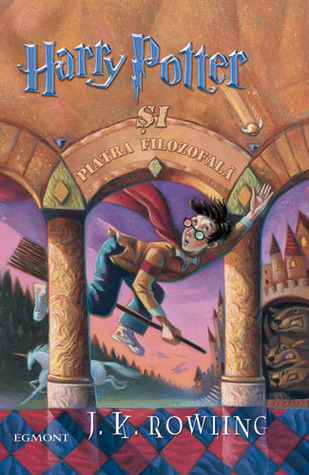
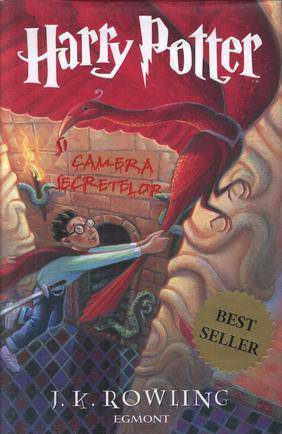
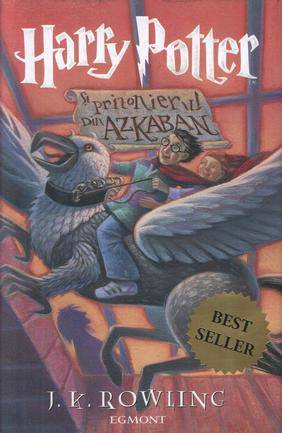
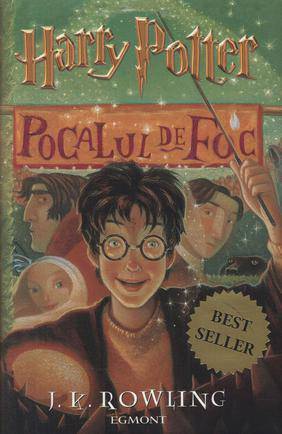
📖 Harry Potter Reading Order
The seven main Harry Potter novels tell one continuous story, so this is a series I would strongly recommend reading in publication order. Each book builds on events, relationships and discoveries from the previous volumes, and many of the later revelations lose their impact if the books are read out of sequence.
- Harry Potter and the Philosopher’s Stone
- Harry Potter and the Chamber of Secrets
- Harry Potter and the Prisoner of Azkaban
- Harry Potter and the Goblet of Fire
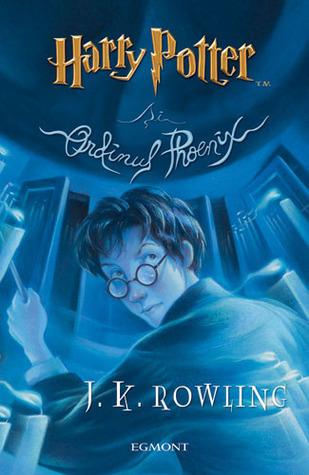
- Harry Potter and the Order of the Phoenix
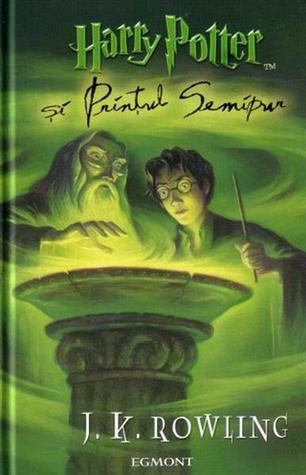
- Harry Potter and the Half-Blood Prince
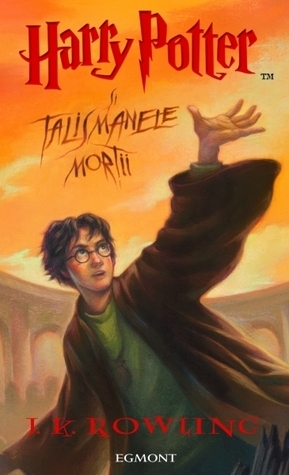
- Harry Potter and the Deathly Hallows
The progression between the books is also part of the experience. The first volumes are much closer to children’s fantasy and school adventures, while the later books become increasingly darker and more concerned with war, loss, prejudice, power and sacrifice.
🇷🇴 Harry Potter in Romanian
My own copies of the seven Harry Potter books are the older Romanian editions published by Egmont, and those are the editions I read for these reviews.
The series is currently available in Romanian from Arthur, with newer editions and cover designs. For the individual BookFairy reviews, I have included information about the current Arthur editions alongside details of the Egmont copies I own, so readers looking for the books today can easily identify the editions that are currently available.
I particularly like having both perspectives represented on BookFairy: the editions that belong to my own reading history and the editions that a reader discovering the series now is most likely to find in Romanian bookshops.
📚 Complete Bibliography & Reading Order
Looking to explore J. K. Rowling’s work beyond the Harry Potter series?
Discover her complete bibliography, including the seven Harry Potter novels, the Fantastic Beasts screenplays, Hogwarts companion books, standalone fiction, nonfiction and the Cormoran Strike crime series published under the pseudonym Robert Galbraith.
The guide includes original publication dates, recommended reading orders, Romanian translations and editions, and links to all seven of my Harry Potter book reviews on BookFairy.
📖 Explore J. K. Rowling’s Complete Bibliography, Reading Order & Romanian Translations →
⭐ Where Should You Start?
With Harry Potter and the Philosopher’s Stone.
This is not a series where I would recommend jumping directly to the most popular or darkest volume. The emotional impact of the later books depends heavily on knowing the characters from the beginning and watching Hogwarts change from a place of wonder and safety into something much more complicated.
The first book establishes Harry, Ron and Hermione’s friendship, introduces Hogwarts and the wizarding world, and plants ideas that continue to matter throughout the entire series. Even if the early books feel lighter than what comes later, that contrast is an important part of the journey.
Starting at the beginning also means watching the series grow alongside its characters — which, for me, is one of the most interesting things about reading all seven books together.
💜 My Favourite Harry Potter Book
Choosing just one favourite from the series is difficult for me, because two books stand out for different reasons: Harry Potter and the Philosopher’s Stone and Harry Potter and the Goblet of Fire.
Philosopher’s Stone has something the later books can never completely recreate: that first sense of discovery. Hogwarts is still entirely new, the wizarding world feels enormous and magical, and almost every chapter introduces something that becomes part of the identity of the series. There is a warmth and sense of wonder to it that remains special even after knowing where the story eventually goes.
Goblet of Fire, on the other hand, is where the series begins to change in a much more obvious way. The Triwizard Tournament gives the book a larger scale, the wizarding world expands beyond Hogwarts, and the final part marks the point where the danger stops feeling temporary. Voldemort’s return changes everything that comes afterwards.
So for me, these two books represent the two sides of Harry Potter I enjoy most: the magic and excitement of discovering the world for the first time, and the moment when that world becomes darker, bigger and much more dangerous.