 Fantasy
📝 First Impressions
Some books stay with me because of a particular scene, a character or a twist. Basmania: Răspântia gândurilor stayed with me in a different way: after all these years, I may not remember every detail of the plot, but I remember very clearly how much I loved reading it.
And, honestly, sometimes that says more about a book than being able to reconstruct every chapter.
What stayed with me most was the pleasure of entering its world. Valentin Nicolau takes the familiar machinery of fairy tales and twists it into something playful, strange and very much its own. Basmania is not just a fantasy setting populated by fairy-tale creatures. It is a world built around the existence of stories, imagination and belief.
The central idea is one I still find wonderful: stories need people in order to survive. The world of fairy tales exists because someone still believes in it, still tells stories, still wants to listen to them. When that connection begins to weaken, Basmania itself is threatened.
That turns imagination into something much bigger than decoration. It becomes necessary.
I also remember loving the tone of the book. There is humour, wordplay and a kind of absurdity that fits perfectly with the world Valentin Nicolau creates. The names, the situations and the logic of the place often feel as though an old fairy tale has been taken apart and rebuilt by someone who understands both how magical and how ridiculous fairy-tale rules can be.
And I loved that.
Even now, so many years later, I remember Basmania: Răspântia gândurilor less as a sequence of events and more as a place I was genuinely happy to visit. For me, that is one of the strongest compliments I can give a fantasy book.
💜 What I Loved
What I loved most about Basmania: Răspântia gândurilor was the feeling that the book understood something very important about stories: they are not harmless little decorations we add to life when we have spare time. They shape the way we think, the way we imagine possibilities and, sometimes, the way we survive reality.
That idea is buried underneath all the humour, the strange names, the fairy-tale logic and the fantasy, but for me it is the heart of the book.
I loved the fact that Basmania feels like a world that exists because stories exist. There is something wonderfully circular about that. We create stories, stories create worlds, and those worlds then come back and influence us. It makes the relationship between reader and story feel almost physical. If we stop believing, stop imagining, stop telling stories, something is genuinely lost.
That concept stayed with me much longer than many more complicated fantasy plots have.
I also really enjoyed the way Valentin Nicolau plays with the structure of traditional fairy tales without simply copying them. The book has the flavour of old stories, but it does not feel like someone has taken familiar characters, changed a few names and called it a new fantasy world. There is a sense of invention everywhere.
The language is part of that pleasure.
There are names and expressions that sound as though they belong in a fairy tale and a joke at the same time. The humour often comes from the words themselves, from the absurd seriousness with which strange things are treated, and from that very Romanian talent for looking at something ridiculous and responding as though, naturally, this is just how the world works.
That kind of humour works extremely well for me.
And beneath it, there is also a surprising amount of intelligence.
The book can be playful without being empty. That is something I always appreciate in fantasy. I do not need every imaginative book to become a philosophical thesis, but I love when a story gives me something to think about once the adventure itself is over. Basmania did exactly that.
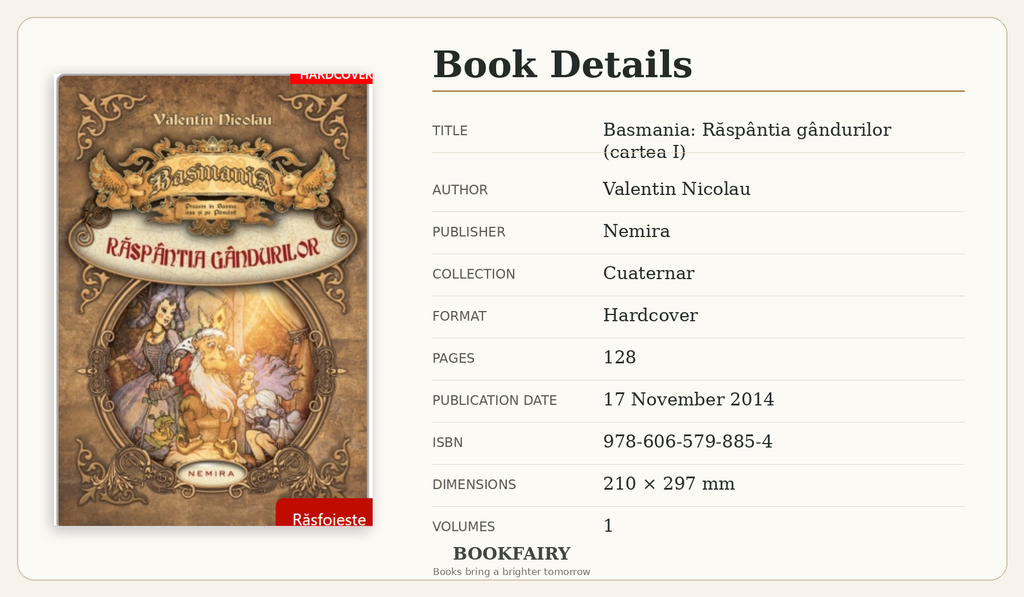
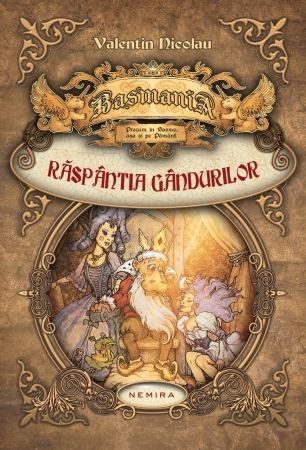
There is also the visual side of the book. The illustrations contribute to the feeling that you are holding something created as a complete object rather than simply text printed between two covers. They belong to the atmosphere of the story and help reinforce that sense of entering an illustrated, slightly chaotic fairy-tale universe.
And perhaps the most important thing is that the book never felt ashamed of imagination.
It embraces it completely.
There are books that seem almost embarrassed to be fantasy, as though every magical element needs to be explained, rationalised or made sufficiently dark and serious before adults are allowed to enjoy it. Basmania does not give me that feeling. It allows fantasy to be strange, funny, extravagant and imaginative simply because those things are valuable in themselves.
I think that freedom is one of the reasons I remember loving it so much.
Even though the details have faded with time, the delight has not.
And that is rare.
🤔 What Didn’t Quite Work for Me
There is honestly very little I remember disliking about Basmania: Răspântia gândurilor. Because so many years have passed since I read it, I do not want to invent weaknesses now just to fill this section. What stayed with me was the opposite: the feeling that the book worked extremely well for me.
If anything, I can imagine the playful language and the unusual fairy-tale logic not working for every reader. The book has its own rhythm, its own humour and a world that enjoys being strange. Someone looking for very straightforward fantasy might find parts of it too whimsical or too interested in wordplay.
For me, though, that was part of the charm rather than a problem. I liked that the book had such a clear personality and never tried to flatten itself into something more conventional.
👥 Who Would Enjoy This Book?
I think Basmania: Răspântia gândurilor would work especially well for readers who love fantasy that feels playful, unusual and a little unpredictable. This is not the kind of book that tries to imitate the structure of a modern epic fantasy. It has its own logic, its own humour and a world that feels much closer to fairy tales, folklore and storytelling itself.
It would also suit readers who enjoy books where language is part of the fun. The names, expressions and absurd little details are not just decoration; they help create the personality of Basmania. If you like fantasy that plays with words and with the conventions of old stories, there is a lot here to enjoy.
And I would especially recommend it to readers who still believe that stories matter. Underneath the humour and the strange world, there is a very warm idea at the centre of the book: imagination needs to be kept alive. If you enjoy fantasy that can be funny, clever and genuinely affectionate about the power of stories, Basmania is worth discovering.
💭 Final Thoughts
Basmania: Răspântia gândurilor is one of those books I remember with affection even though time has blurred some of the details. What stayed clear was the feeling of having entered a world that was clever, funny and completely comfortable with being strange. I loved the imagination behind it, the wordplay, the fairy-tale logic and the idea that stories themselves have weight and consequence.
The thought that imagination can disappear if we stop feeding it is probably the part that stayed with me most. It gives the book a warmth that goes beyond the adventure itself. Basmania exists because stories exist, and stories exist because people still choose to tell them, read them and believe in them. There is something genuinely beautiful in that.
I also appreciate that the book never seems embarrassed by its own fantasy. It allows itself to be playful and unusual, while still carrying ideas about memory, belief and the importance of keeping stories alive. That combination worked extremely well for me.
Years later, I may not remember every turn of the plot, but I remember loving the experience of reading it. For me, that is enough to know that Basmania: Răspântia gândurilor did exactly what a good fantasy book should do: it made its world feel real enough to stay with me long after I left it.
✨ The BookFairy Verdict
Basmania: Răspântia gândurilor
Fantasy