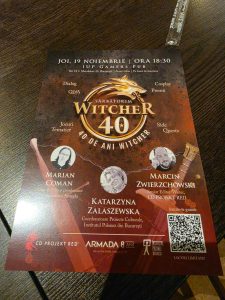
On 19 November 2026, Bucharest became a small corner of the Continent as readers, gamers, cosplayers, publishers and fantasy enthusiasts gathered at 1UP Gamers Pub to celebrate two anniversaries: 40 Years of The Witcher and 8 Years of Armada, Nemira’s science fiction, fantasy and thriller imprint.
Organised in collaboration with CD PROJEKT RED, GOG.com and the Polish Institute in Bucharest, the event brought together different generations of fans whose connection to Andrzej Sapkowski’s universe began in different ways. Some discovered Geralt of Rivia through the books, others through the video games, and many have followed both. What united everyone was a shared enthusiasm for a fictional world that has long since grown beyond its literary origins.
I attended the celebration as a volunteer, but also as someone who loves books and the communities that form around them. Having recently returned to Bucharest after years in the United Kingdom, I particularly enjoyed being part of a literary event that brought so many different people together. It was a wonderful reminder that stories have a remarkable ability to create connections.
40 Years of The Witcher: From Books to a Worldwide Phenomenon
The Witcher began its journey in 1986, when Polish author Andrzej Sapkowski introduced Geralt of Rivia in a short story that would eventually develop into one of the most recognisable fantasy universes in the world. Over the following four decades, the White Wolf’s adventures expanded from literature into video games, television and an extraordinary international fandom.
Having recently read The Last Wish, I had the opportunity to discover the literary foundations of The Witcher for myself. Sapkowski’s reinterpretation of familiar fairy tales, his morally ambiguous characters and Geralt’s complicated relationship with both humans and monsters gave me a greater appreciation of the universe being celebrated that evening. You can read more about my experience in my review of The Last Wish by Andrzej Sapkowski.
Yet, despite its popularity across different media, The Witcher remains deeply connected to its literary roots. Sapkowski’s world is shaped by Slavic folklore, political conflicts, moral ambiguity and characters whose decisions rarely fit neatly into categories of good and evil. Geralt may hunt monsters for a living, but the stories repeatedly remind us that the most dangerous creatures do not always have claws or fangs.
The celebration of 40 Years of The Witcher offered an opportunity to appreciate this remarkable journey and the different ways readers and players have experienced the same universe. It was also a fitting occasion to recognise the importance of Polish fantasy literature and its influence beyond Poland’s borders.
Eight Years of Armada: Celebrating Fantastic Literature
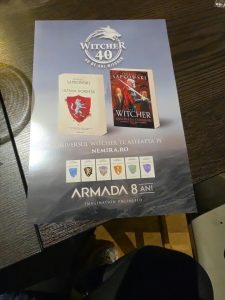
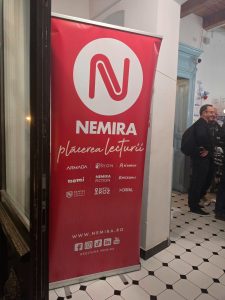
The evening was also dedicated to the eighth anniversary of Armada, Nemira’s imprint devoted to science fiction, fantasy and thriller literature. For Romanian readers, Armada has become a familiar name, bringing international authors and imaginative worlds to local bookshelves while also supporting Romanian fantastic literature.
The anniversary was particularly meaningful in the context of an event that celebrated the relationship between books and other forms of storytelling. The Witcher is an excellent example of how a literary creation can develop into a much larger cultural phenomenon without losing the importance of the original work.
For me, the presence of Armada added another dimension to the celebration. This was not simply a gathering of video game enthusiasts or a promotional event. It was also an occasion to celebrate reading, publishing, translation and the people whose work allows stories to travel between languages and cultures.
A Conversation About The Witcher and Its Legacy
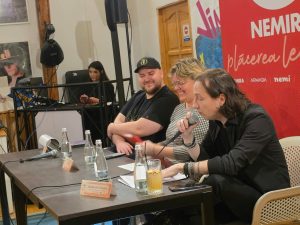
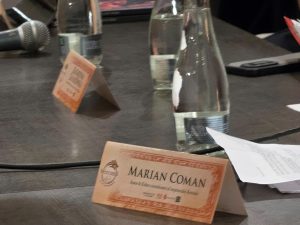
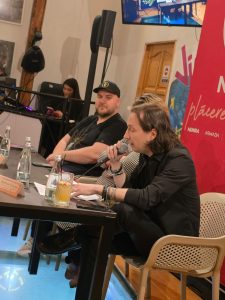
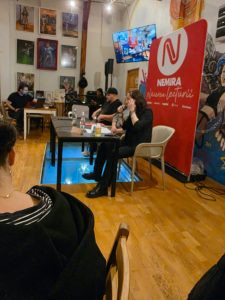
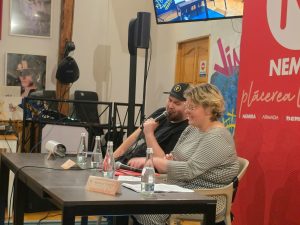
One of the central attractions of the evening was a discussion featuring Marian Coman, writer, editor and coordinator of Armada; Marcin Zwierzchowski, senior editor and writer at CD PROJEKT RED; and Katarzyna Zalaszewska, cultural projects coordinator at the Polish Institute in Bucharest.
Their participation brought together three complementary perspectives: literature and publishing, video game development, and cultural exchange between Poland and Romania. The discussion and Q&A formed the more reflective part of an evening otherwise filled with costumes, games and activities.
It was especially interesting to see representatives of these different fields sharing the same stage. The Witcher has become an international success precisely because its universe can be explored through several forms of storytelling, each offering something different to its audience.
The conversation also reflected the wider importance of fantasy as a cultural phenomenon. What begins as a story on a page can eventually inspire entire communities, creative projects and experiences that bring people together decades after its first publication.
Cosplay, Gaming and Witcher-Themed Activities
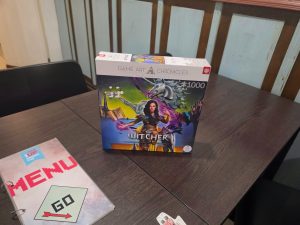
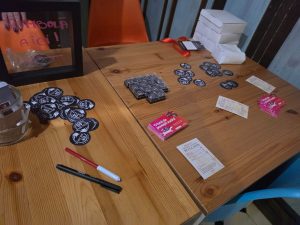
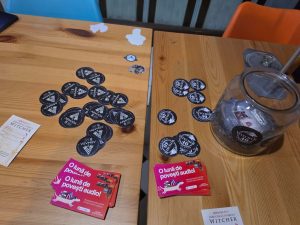
Of course, a celebration of 40 Years of The Witcher would hardly have been complete without a little adventure. The event featured themed games, cosplay, side quests and prizes, giving visitors opportunities to immerse themselves in the fictional universe beyond the main discussion.
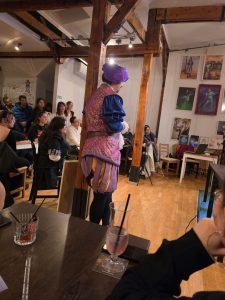
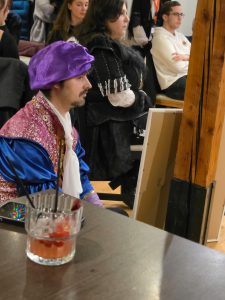
One of the most enjoyable visual elements was the presence of cosplayers. Their elaborate costumes brought a distinctly fantastical atmosphere to the venue, and the contrast between the everyday surroundings of a Bucharest pub and the characters inspired by imaginary worlds was delightful. The attention to detail, from fabrics and accessories to the overall presentation, showed how much creativity and enthusiasm goes into cosplay.
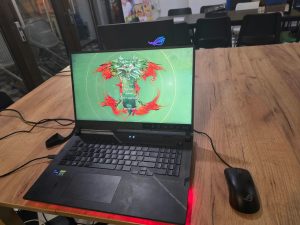
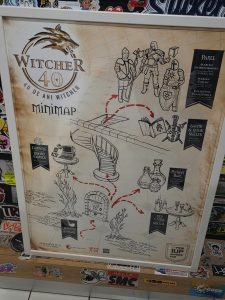
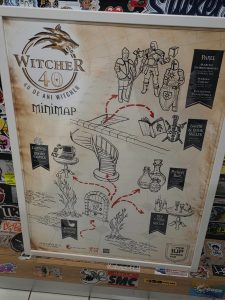
Gaming was another important part of the celebration. A dedicated gaming setup allowed visitors to engage with The Witcher universe in its interactive form, while themed activities and a specially designed minimap encouraged participants to explore different areas of the venue. The event felt less like a conventional literary presentation and more like a small fantasy gathering, with something to discover around every corner.
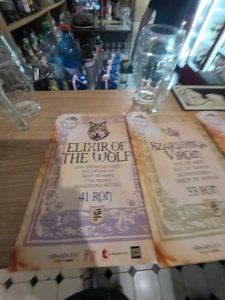
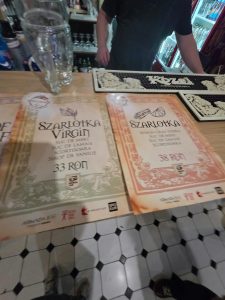
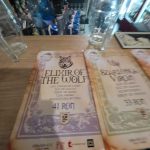
There was even a Polish-inspired touch at the bar, where guests could choose between three themed cocktails. Two were alcoholic — Elixir of the Wolf and Szarlotka — while Szarlotka Virgin offered a non-alcoholic alternative. It was a charming addition to the evening, connecting the celebration to the Polish origins of The Witcher while contributing to the playful atmosphere.
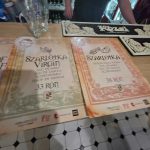

Between the games, conversations, costumes and activities, there was always something happening. People moved between different areas, stopped to admire costumes, talked about books and games, and simply enjoyed being surrounded by others who shared their interests.
An Evening Straight Out of a Fantasy Story
What I enjoyed most about the evening was its atmosphere. There was something genuinely magical about seeing cosplayers, gamers, editors, translators and readers gathered in the same place, each bringing their own connection to fantasy and storytelling.
I was also delighted to see familiar names from the Romanian literary and translation community, including Dan Pavelescu and Liviu Szoke. Translators play an essential role in bringing international literature to Romanian readers, and their presence was another reminder that behind every translated book stands a great deal of work that readers do not always get to see.
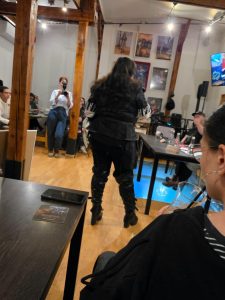
The setting itself contributed to the experience. With its wooden beams, artwork, gaming areas and lively conversations, 1UP Gamers Pub provided a welcoming environment for a celebration that moved naturally between literature and gaming culture. The room was full of enthusiasm, and the atmosphere felt wonderfully informal despite the presence of guests from publishing and the gaming industry.
There was no need for elaborate spectacle to make the evening memorable. The costumes, the conversations, the laughter and the shared excitement were more than enough. For a few hours, the boundaries between the worlds of books, games and everyday life seemed a little less distinct.
And that, to me, is one of the most appealing things about fantasy. It allows people with different backgrounds and interests to meet on common ground, united by stories that continue to inspire them.
Behind the Scenes: My Experience as a Volunteer
Being involved as a volunteer gave me another perspective on the celebration. Rather than experiencing the evening exclusively as a member of the audience, I had the opportunity to be part of the event itself.
I have always enjoyed literary gatherings, but there is something particularly rewarding about contributing to the activities that make them possible. Events like this depend on the enthusiasm and efforts of many people, both visible and behind the scenes, and volunteering offers a different appreciation of that work.
The experience was enjoyable enough that I am looking forward to volunteering again, this time at Nemira’s stand during the Gaudeamus Book Fair. After an evening surrounded by books, fantasy enthusiasts and people from the publishing world, it feels like a natural continuation.
For someone who spends so much time reading, writing about books and exploring literary universes through BookFairy, opportunities like these are particularly meaningful. They are a reminder that reading may often be a solitary activity, but the love of books certainly does not have to be.
Forty Years Later, the White Wolf Still Rides
Looking back on the evening, what stays with me is not just the anniversary itself, but the people who came together to celebrate it. Forty years after Geralt of Rivia first appeared in print, The Witcher continues to inspire readers, gamers, artists and entire communities.
The celebration of 40 Years of The Witcher demonstrated how a fictional universe can cross borders, languages and generations, while Armada’s eighth anniversary highlighted the continuing importance of publishers in bringing fantastic literature to readers.
I left 1UP Gamers Pub with the feeling that I had attended something more personal than a conventional anniversary event. It had been an evening of stories, creativity, shared enthusiasm and a genuine sense of belonging to a community of people who understand why imaginary worlds matter.
And perhaps that is the greatest achievement of fantasy literature: long after we close a book or finish a game, its worlds remain with us, waiting to be revisited, discussed and celebrated.
Happy 40th anniversary to The Witcher, and happy 8th anniversary to Armada!