BookFairy | Literary Events | 24 October 2026
Some literary encounters remind us that books are not simply stories we read. They are conversations about what it means to be human.
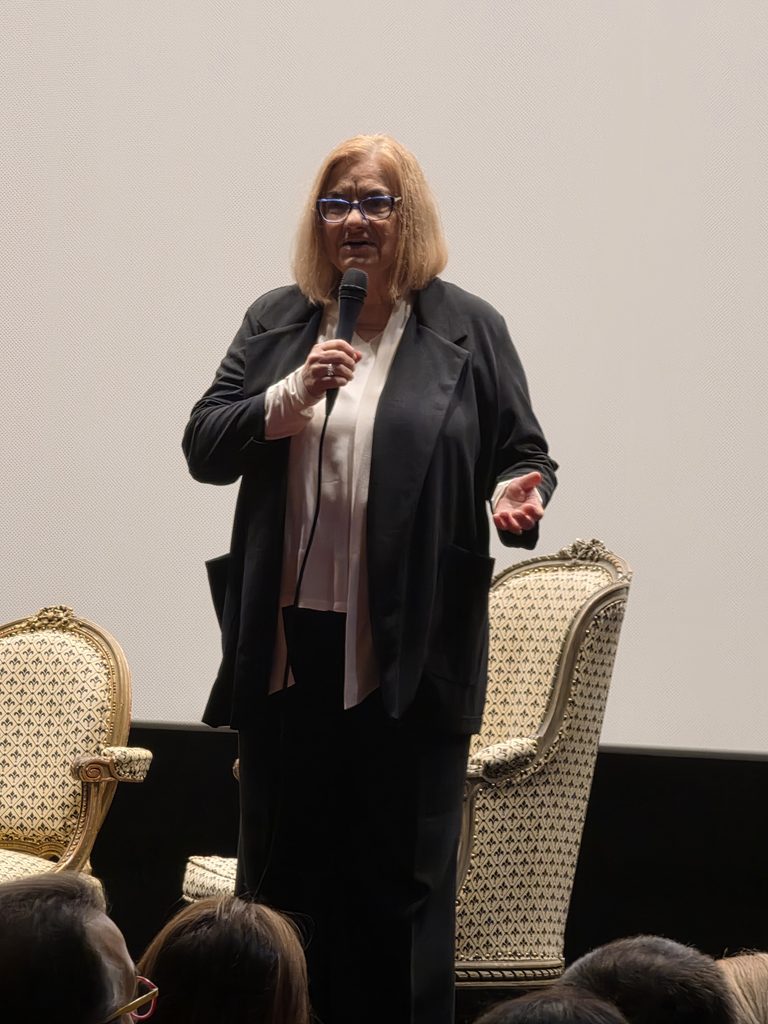
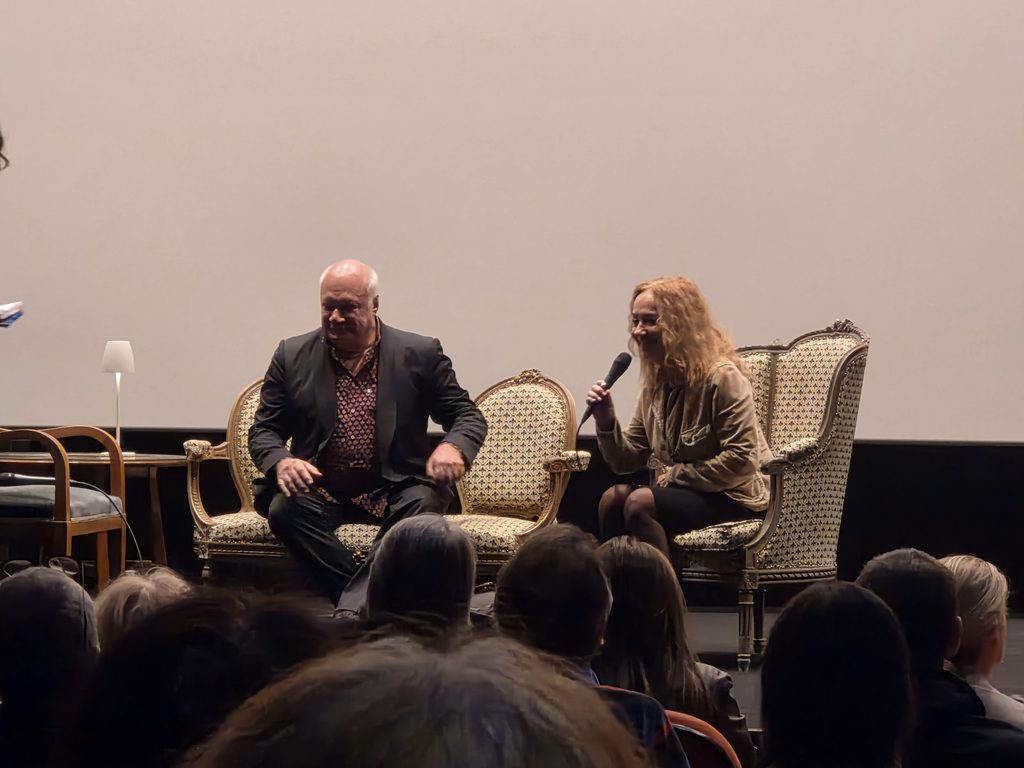
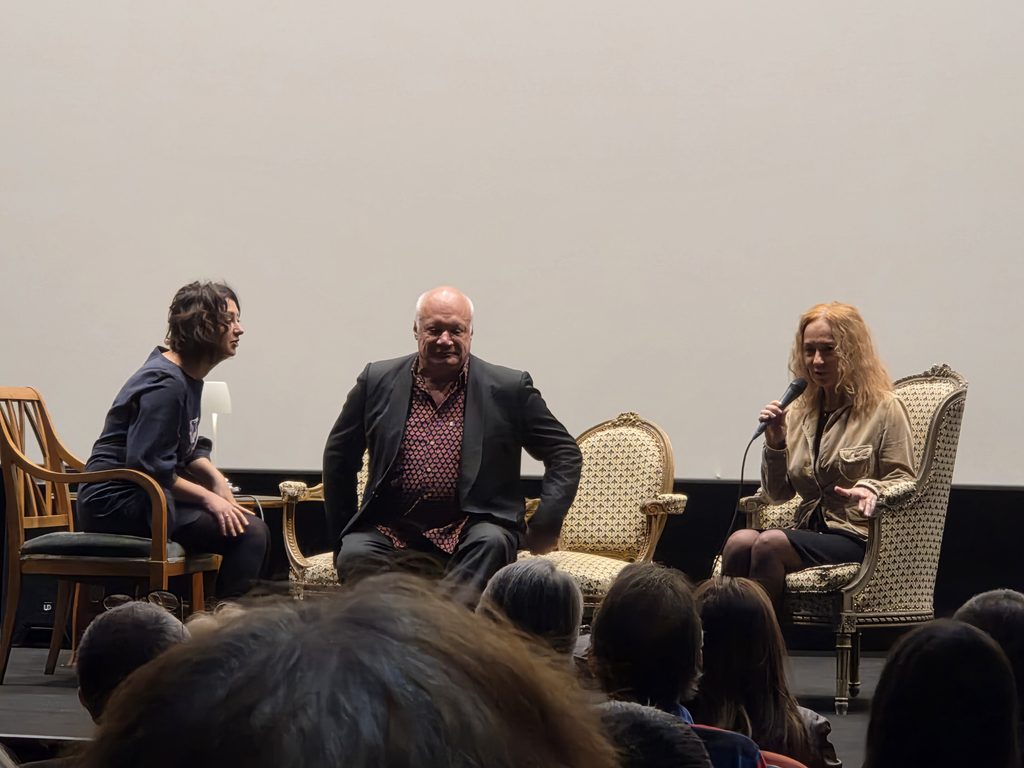
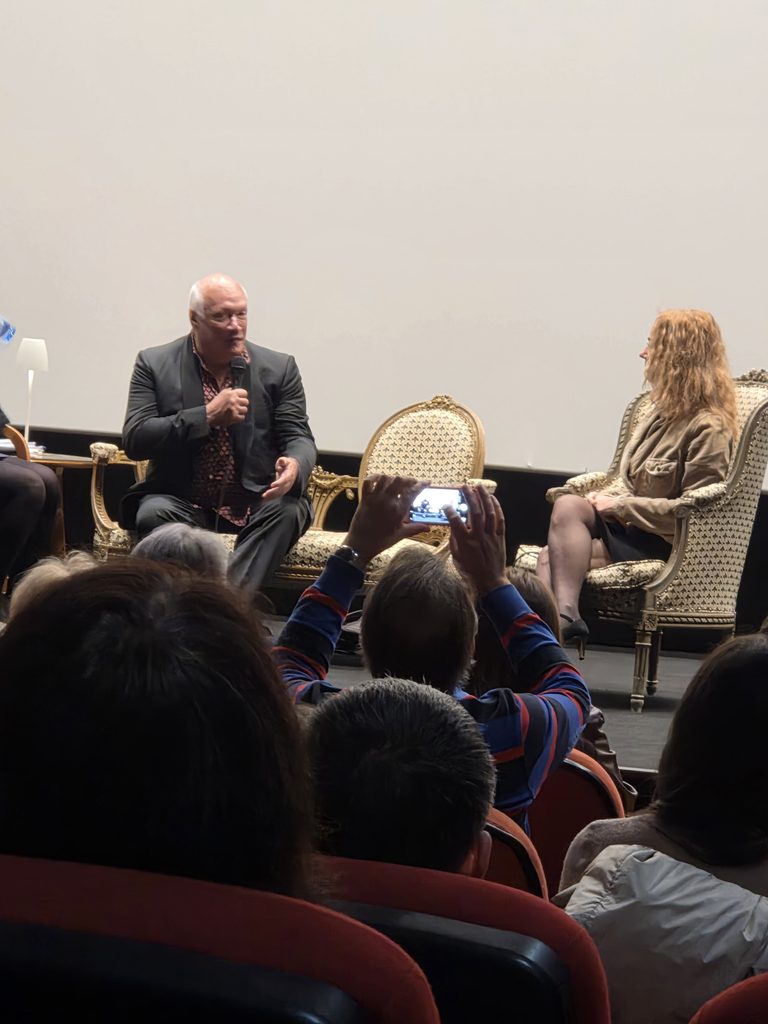
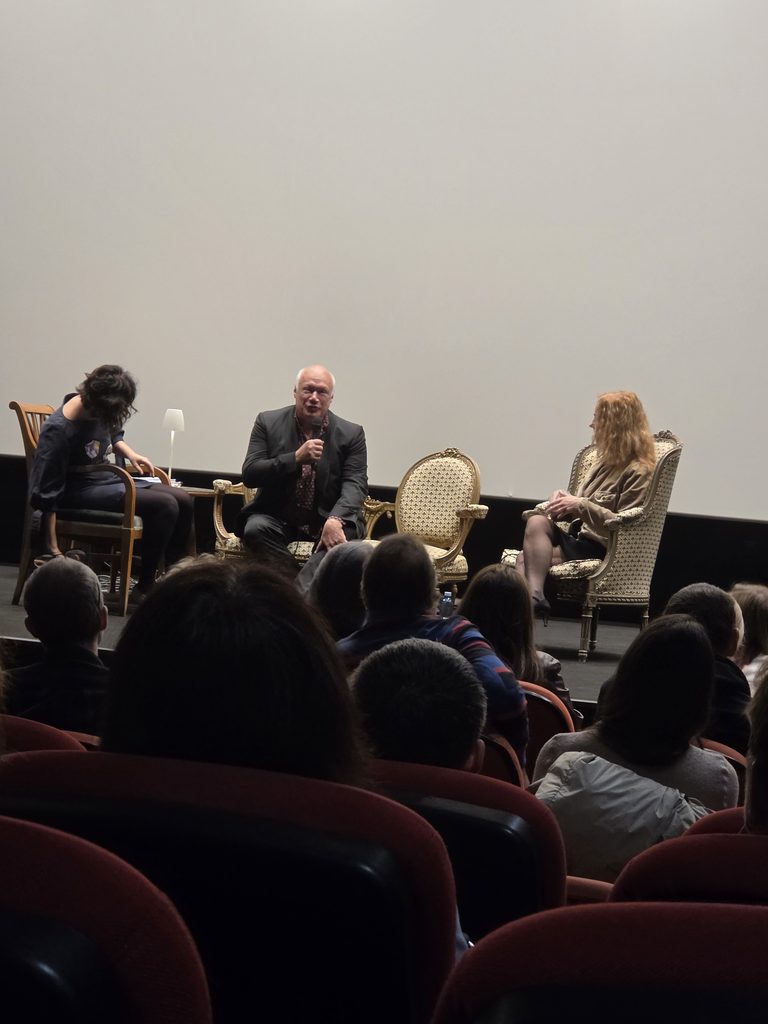
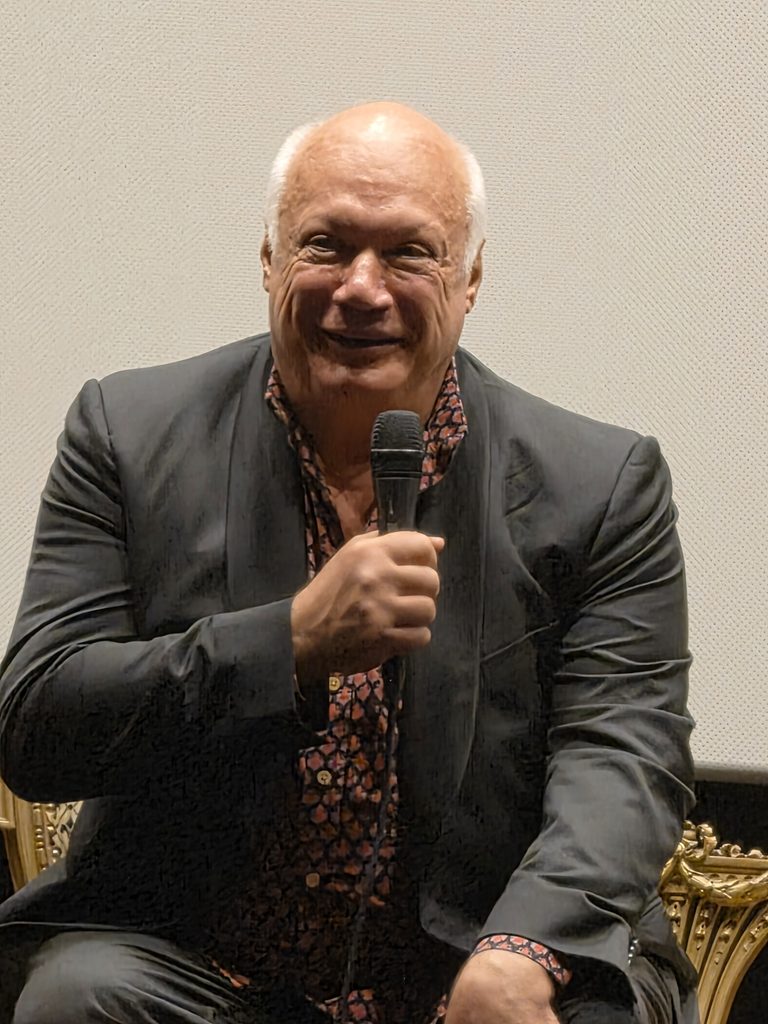
On Saturday, 24 October 2026, I attended a conversation with French-Belgian author and playwright Éric-Emmanuel Schmitt, hosted by Marina Constantinescu at the Horia Bernea Studio, Cinema Muzeul Țăranului, in Bucharest.
Schmitt spoke in French, accompanied by a Romanian interpreter, as the discussion moved through literature, philosophy, history, spirituality, music and the extraordinary complexity of human relationships.
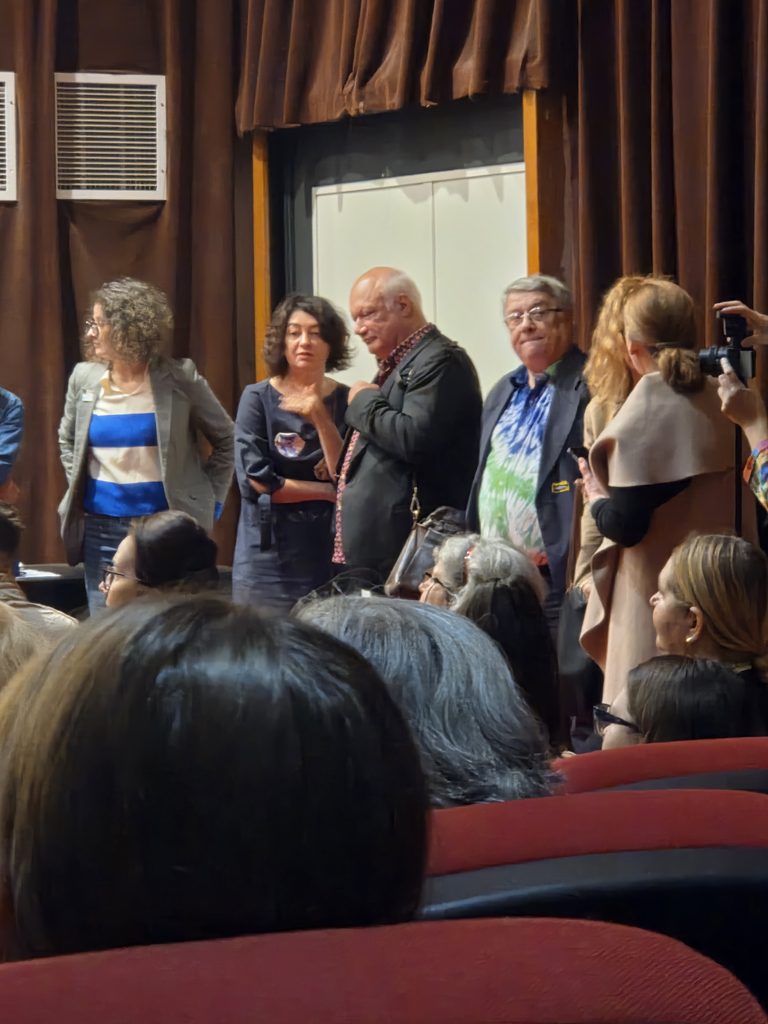
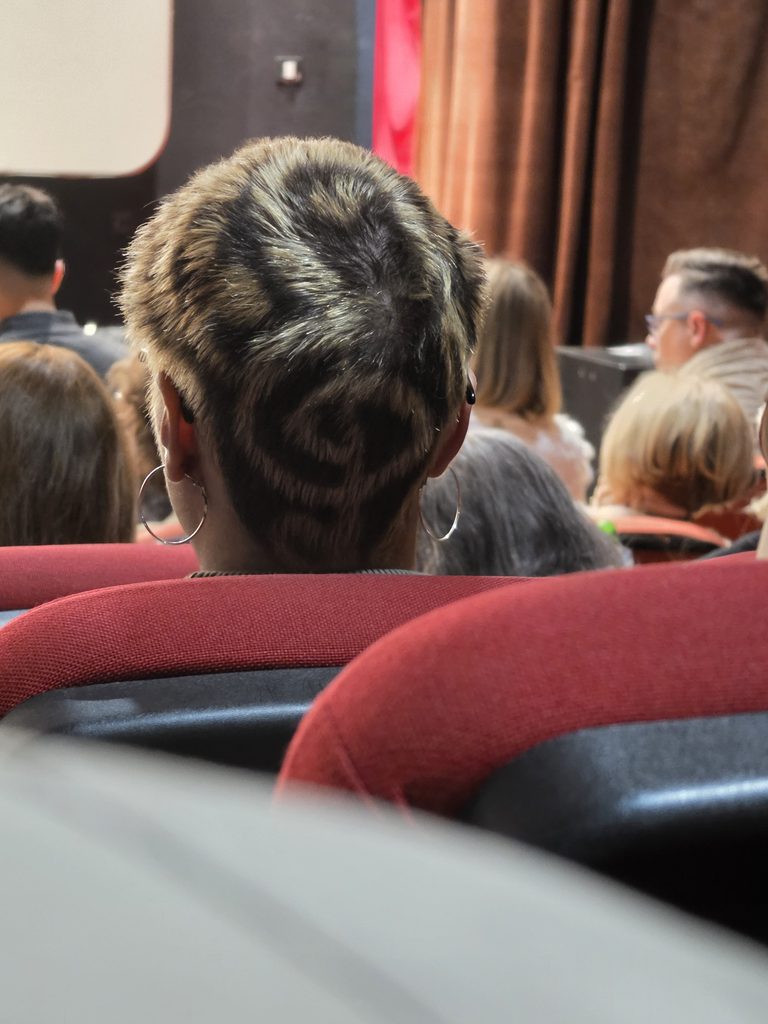
The event also brought together familiar faces from Romania’s cultural world. Among the audience, I recognised the wonderful Romanian actress Emilia Popescu.
What followed was a conversation about much more than books. It was an exploration of the questions that have accompanied humanity for thousands of years: Why do we love? What makes us human? How did we become the civilisation we are today? And what responsibility do we have towards the world we inhabit?
Éric-Emmanuel Schmitt and Humanitas Fiction: 30 Books in Romanian
Éric-Emmanuel Schmitt has enjoyed a long-standing relationship with Romanian readers through Humanitas Fiction, which publishes his works in a dedicated author series.
During the introduction to the conference, the publisher’s representative recalled that Schmitt was among the authors who helped establish the Humanitas Fiction imprint. She also announced a remarkable milestone: the publication of the 30th Schmitt title in the publisher’s dedicated series, released approximately a week before the event.
The author’s visit to Bucharest coincided with the publication of two recent Romanian translations: Cele două împărății (La Lumière du bonheur), the fifth volume in his historical saga La Traversée des temps, and După Dumnezeu, vine tata, a work exploring the complex relationship between Wolfgang Amadeus Mozart and his father.
Both books were translated into Romanian by Doru Mareș.
The previous evening, 23 October, Schmitt had also attended a book launch at the Humanitas Bookshop in Cișmigiu, followed by a signing session.
This enduring collaboration between author, publisher and readers made the Bucharest conference particularly meaningful: it was not simply a visiting writer’s appearance, but another chapter in a literary relationship built over many years.
❤️ Love Is Not Possession
One of the most memorable parts of the conversation concerned love.
Schmitt suggested that we often search for intellectual, philosophical or political solutions to life’s difficulties when the answer may be something much simpler: love.
But he was careful to distinguish genuine love from pleasure.
In his view, contemporary society has developed an overly hedonistic understanding of romantic relationships. We sometimes remain in love only as long as the relationship brings us happiness and excitement.
Yet genuine love is tested when passion fades and we encounter another person as they truly are, with all their contradictions, imperfections and mysteries.
Speaking about Noam and Noura, the central characters of his ambitious historical saga La Traversée des temps, Schmitt offered a particularly beautiful definition:
“To love is not to know. To love is not to possess. To love is to remain faithfully acquainted with a mystery.”
Translated from the original French.
For Schmitt, another human being can never be completely understood or possessed.
He compared Noura to a diamond with a thousand facets: just when someone believes they have understood her, another dimension emerges.
The mystery is not an obstacle to love. It is part of what makes love possible.
🌍 The Ecological Anxiety of Our Century
Another fascinating subject was the anxiety that defines modern civilisation.
Schmitt explained that his historical saga grew from a deceptively simple question:
How did we get here?
Our ancestors were hunters, gatherers and nomads, living in a world where nature was far more abundant and humanity occupied a comparatively small place.
Thousands of years later, human civilisation has transformed the planet.
But progress has brought a new kind of fear.
Schmitt described ecological anxiety as something distinctive to the twenty-first century.
Throughout history, people have feared the end of the world. They imagined destruction arriving through divine intervention, supernatural forces or natural catastrophe.
Today, however, humanity has begun to fear itself.
Our technological power, our weapons and our exploitation of natural resources have given us the capacity to threaten our own survival and the existence of countless other species.
The question is no longer simply whether the world might end.
It is whether humanity itself could become responsible for that ending.
This concern forms part of the philosophical foundation of La Traversée des temps, a series that examines the great turning points of civilisation and the fragile circumstances that shaped our present.
📖 Eight Thousand Years of Human History
Schmitt’s historical saga follows Noam, an immortal character who witnesses the transformation of human civilisation across millennia.
Each volume explores a historical turning point: a moment when an established world begins to disappear and something new emerges.
What interested me about Schmitt’s explanation was his emphasis on historical uncertainty.
The world we know was never inevitable.
Ideas appeared, flourished and sometimes disappeared. Societies developed institutions and abandoned them. Human relationships and the position of women changed across different civilisations and historical periods.
He mentioned ancient Greek democracy as an example of an influential idea that emerged without following a simple, uninterrupted path towards the present.
History, in Schmitt’s telling, is not a straight line of inevitable progress.
It is a succession of fragile transformations, shaped by choices, circumstances and ideas that might never have existed.
⚖️ Spartacus, Jesus and the Idea of Equality
One of the more provocative sections of the discussion concerned Spartacus, the Roman world and the emergence of equality as a transformative philosophical principle.
Schmitt drew a distinction between rebellion and revolution.
In his interpretation, Spartacus led a rebellion against oppression, but lacked the philosophical foundation necessary to transform the social order.
He associated that missing foundation with the concept of human equality expressed through the teachings of Jesus.
Whether rich or poor, enslaved or free, male or female, people could be understood as possessing equal human worth.
Schmitt argued that this principle eventually helped transform civilisation and influenced later understandings of human rights.
He also acknowledged the contradictions within Christian institutions, particularly their historical acceptance of slavery and the continued exclusion of women from certain religious roles.
His interpretation of the origins of equality is open to historical and philosophical debate, but the larger question was compelling:
Can a single idea fundamentally change the course of human history?
For Schmitt, the answer is yes.
🗣️ The Power of Stories Told Aloud
As a writer, Schmitt might be expected to defend the written word above everything else.
Instead, he offered a thoughtful reflection on the importance of oral tradition.
Discussing the druids of ancient Gaul, he described a culture in which knowledge was transmitted orally, even though its learned members were familiar with writing.
Why preserve knowledge through speech rather than simply recording it?
Because oral communication is alive.
A speaker adapts to the audience, responds to questions and places knowledge within a particular context.
Schmitt mentioned Socrates, Buddha and Jesus as figures whose teachings reached later generations without their having authored the written works through which we know them.
Their ideas continued to be interpreted, discussed and renewed through successive generations.
For a literary audience, it was an especially fitting reflection.
Books preserve stories, but conversations keep them moving.
🕊️ Trauma, Silence and the Importance of Words
The discussion also explored a darker subject: sexual violence and its psychological consequences.
Schmitt spoke about a traumatic experience suffered by Noam in one of the novels.
He explained that he had read testimonies by women who experienced sexual violence and had learned a great deal from their accounts.
Rather than attempting to speak on their behalf, he wanted to explore how a man might experience a similar trauma.
What interested him particularly was the silence that can follow violence.
Noam struggles to name what happened to him. Unable to express the experience, he remains trapped by its consequences.
Only when he finally finds the words to describe his suffering can he begin to free himself from it.
It was a powerful reminder of one of literature’s essential functions: giving language to experiences that might otherwise remain unspoken.
✍️ Writing as an Act of Creation
Schmitt also offered an intimate and unexpectedly humorous description of his creative process.
He compared writing a book to pregnancy and childbirth.
Everything he experiences, hears and observes contributes to the development of a story growing inside him.
Eventually, the pressure becomes impossible to ignore. He must write.
Completing the work brings relief, but also a sense of separation from something that has occupied his inner world for so long.
For Schmitt, writing is deeply connected to what he considers the feminine dimension of creativity: nurturing, carrying and ultimately bringing something new into existence.
This led naturally to a moving reflection on his mother.
He described her as intelligent, sensitive, tolerant and intuitive, and spoke about the profound influence she had on his life.
He sees many of his own best qualities as gifts inherited from her.
By continuing to cultivate those qualities, he feels that something of her remains alive.
And when he looks at his daughter, he sometimes recognises his mother again.
It was a beautiful illustration of how love, memory and identity continue across generations.
🎼 Literature, Music and the Celebration of Life
Music also formed part of the conversation, alongside theatre and the different artistic forms through which Schmitt explores the human experience.
Marina Constantinescu recalled Mozart’s idea of music as sounds that love one another, connecting it to the musical quality of Schmitt’s writing.
The discussion moved naturally between artistic creation and the values Schmitt associates with the celebration of life: care, attention, tenderness and love.
These themes also connected with his reflections on femininity and masculinity, and with his interpretation of the spiritual values emphasised in the teachings of Jesus.
Throughout the conversation, literature appeared not as an isolated artistic pursuit, but as part of a much larger dialogue between philosophy, history, music, theatre and spirituality.
💭 Final Thoughts
What makes a literary event worthwhile?
Sometimes it is the opportunity to discover something new about a favourite author. Sometimes it is the pleasure of hearing a writer discuss the stories and characters that have occupied so many hours of our reading lives.
And sometimes it is the chance to encounter ideas that extend far beyond the books themselves.
Éric-Emmanuel Schmitt’s conversation in Bucharest offered all the ingredients for that kind of encounter: questions about love, reflections on the fragility of civilisation, the power of ideas, the importance of memory and the mysterious complexity of being human.
His historical novels may span thousands of years, but the questions at their heart remain remarkably contemporary.
How should we love?
What do we owe one another?
What can history teach us about our present?
And what kind of world are we leaving behind?
Perhaps that is one of literature’s greatest achievements.
It does not always give us answers.
Sometimes, it teaches us to ask better questions.
🦋 BookFairy — Where every book opens another world.
Editorial note: This article is based on my attendance at the event and a partial, imperfect transcription of the discussion. Quotations translated from French have been identified accordingly; the remaining remarks are paraphrased rather than presented as verbatim statements.