 Young Adult
 Dystopian

📝 First Impressions
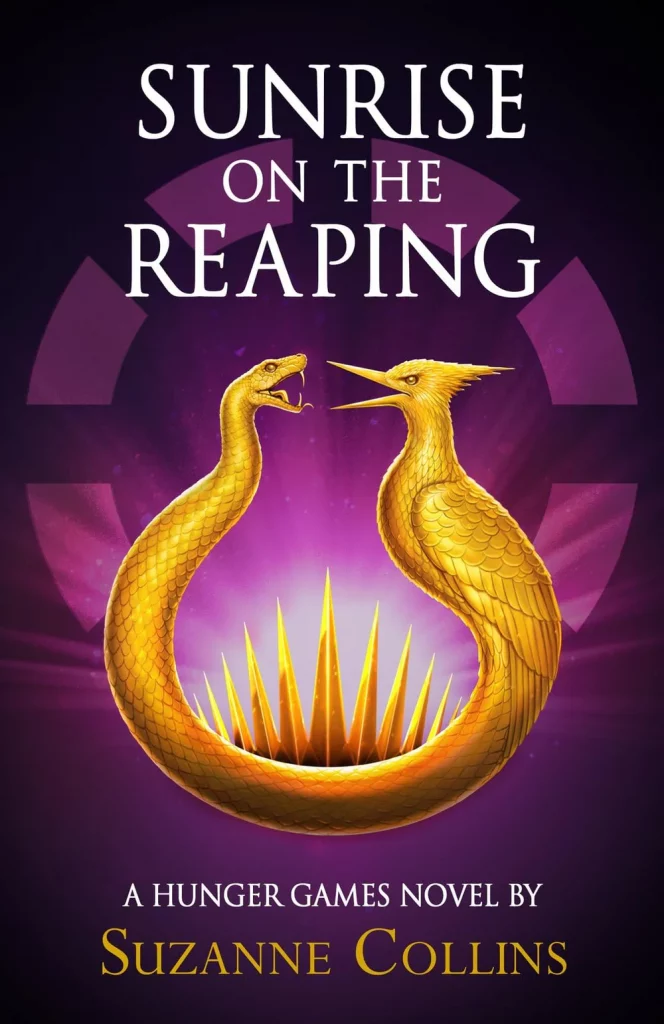
Returning to Panem always feels like stepping back into one of the most fascinating fictional worlds ever created, and Sunrise on the Reaping reminded me exactly why The Hunger Games remains one of my favourite dystopian series.
Suzanne Collins has a remarkable ability to write stories that are both gripping and thought-provoking. Every book set in Panem feels carefully crafted, balancing emotional depth, political commentary, and compelling storytelling, and this latest novel continues that tradition beautifully.
From the very first chapters, I was completely drawn back into the world of Panem. The pacing kept me turning the pages, the atmosphere felt instantly familiar, and the story expanded the universe in ways that felt meaningful rather than simply nostalgic.
🌍 Book Overview (Spoiler-Free)
Set twenty-four years before the events of The Hunger Games, Sunrise on the Reaping takes readers back to one of Panem’s darkest moments: the Fiftieth Hunger Games, better known as the Second Quarter Quell.
Without relying on nostalgia alone, Suzanne Collins expands the world in meaningful ways, exploring the Capitol’s manipulation, the cost of survival, and the difficult choices people make when trapped inside an unjust system.
Even if you’ve already read every Hunger Games novel, this story still feels fresh rather than repetitive, offering new perspectives on familiar events while remaining true to the spirit of the original series.
💜 What I Loved
🎭 Haymitch’s story finally takes centre stage
For years, Haymitch Abernathy has been one of the most fascinating characters in The Hunger Games universe, yet readers have only ever glimpsed fragments of his past. Sunrise on the Reaping finally fills in those gaps, revealing the experiences that shaped the man we first met in the original trilogy.
Rather than simply explaining his backstory, Suzanne Collins gives Haymitch his own powerful voice, making him feel every bit as compelling as Katniss or Coriolanus Snow.
🏛️ A richer, darker Panem
One of the novel’s greatest strengths is the way it expands the world of Panem without feeling repetitive.
Although readers return to familiar locations and institutions, the story explores them from a fresh perspective, revealing new layers of the Capitol’s manipulation, propaganda, and control. Instead of revisiting old ideas, Collins deepens our understanding of how the system truly works.
Like every book in the series, Sunrise on the Reaping is about far more than the Games themselves.
Beneath the action lies a thoughtful exploration of power, inequality, media manipulation, and the human cost of authoritarian rule. Suzanne Collins never lectures the reader, allowing these themes to emerge naturally through the characters and the events unfolding around them.
📖 Familiar, yet never repetitive
Returning to Panem could easily have felt like an exercise in nostalgia, but that never happens.
The novel introduces enough new characters, perspectives, and emotional stakes to stand confidently alongside the rest of the series. It respects everything that came before while still offering readers something genuinely new.
✍️ Suzanne Collins’ storytelling
One of the reasons I continue returning to The Hunger Games is Suzanne Collins’ writing.
Her prose is clear, immersive, and incredibly effective. She doesn’t rely on unnecessary descriptions or dramatic flourishes to create emotion. Instead, she lets the story, the characters, and the difficult choices they face speak for themselves—and once again, it works brilliantly.
Nearly two decades after the publication of the first novel, The Hunger Games remains one of the strongest dystopian series ever written.
Many YA series become popular for a few years before slowly fading away. Suzanne Collins’ books have done the exact opposite. Every new release proves that readers are still eager to return to Panem, not only because of its unforgettable characters but because the themes feel just as relevant today.
Power, propaganda, inequality, media manipulation, and the human cost of political decisions are ideas that continue to resonate long after you finish reading. Collins never writes action simply for the sake of action—every Hunger Games novel asks difficult questions about society and human nature.
Sunrise on the Reaping fits naturally into that legacy. Rather than feeling like a story that exists only to expand a successful franchise, it gives readers another meaningful perspective on Panem and reminds us why this fictional world continues to captivate millions of readers worldwide.
🤔What Didn’t Quite Work for Me
This is the kind of section that often surprises people because I genuinely enjoyed this book.
The truth is that I don’t hand out five-star ratings easily.
For me, five stars are reserved for books that completely astonish me—stories I know I’ll think about for years afterwards.
Sunrise on the Reaping is an excellent novel. It’s engaging, intelligent, emotional, and extremely well written.
But while I loved reading it, it didn’t quite reach that unforgettable, once-in-a-decade feeling that earns a perfect rating from me.
That’s a personal distinction rather than a criticism of the novel itself.
👥 Who Would Enjoy This Book?
I would recommend Sunrise on the Reaping to readers who enjoy:
- dystopian fiction
- young adult novels with mature themes
- political and social commentary
- fast-paced stories with emotional depth
- morally complex characters
- The Hunger Games universe
If you’re already a fan of Suzanne Collins, this book deserves a place on your shelf.
💭 Final Thoughts
If you’ve loved any previous Hunger Games book, I honestly can’t imagine not recommending this one.
Suzanne Collins once again proves why this series has remained relevant for so many years. She understands how to balance action with meaningful social commentary while creating characters you genuinely care about.
Rather than feeling like an unnecessary addition to an already successful franchise, Sunrise on the Reaping earns its place within the series.
It’s exciting, emotional, beautifully written, and another reminder that Panem still has important stories left to tell.
✨ The BookFairy Verdict
Sunrise on the Reaping
📖 Book Details
Title: Sunrise on the Reaping
Romanian Title: Răsăritul în ziua extragerii (Editura Nemira)
Author: Suzanne Collins
Series: The Hunger Games (Book #5, Second Prequel)
Genre: Young Adult, Dystopian
Publisher (English): Scholastic
Publisher (Romanian): Nemira
First Published: 18 March 2025
Format Read: Hardcover
Pages: 382
Perfect For: Readers who enjoy dystopian fiction, survival stories, political intrigue, character-driven narratives, and fans of The Hunger Games universe.
Content Warnings: Violence, death, trauma, oppression, psychological manipulation, grief.
📚 Reading Order
- ✅ Book #1 – The Hunger Games
- ✅ Book #2 – Catching Fire
- ✅ Book #3 – Mockingjay
- ✅ Book #4 – The Ballad of Songbirds and Snakes
- 📖 Book #5 – Sunrise on the Reaping

🛒 Buy the Book
If Sunset on the Reaping sounds like your kind of book, you can support BookFairy by purchasing the book through the links below. It won’t cost you anything extra, and using these links helps support the site while allowing me to continue creating honest, independent book reviews.
📚 Waterstones
📕 Hardcover
📗 Paperback
📦 Amazon UK
📕 Hardcover
📗 Paperback
📘 Kindle Edition
📱 Kobo
📘 eBook
🎧 Audiobook