Jurassic Park by Michael Crichton | Club Armada, Editura Nemira | 27 October 2026
Club Armada October 2026 was anything but an ordinary book club meeting. Michael Crichton’s Jurassic Park brought us together for an unexpected evening of dinosaurs, lively debates and beer.
📚 Club Armada October 2026: A Book Club Meeting with a Twist
Sometimes, the best book club meetings don’t go quite according to plan.
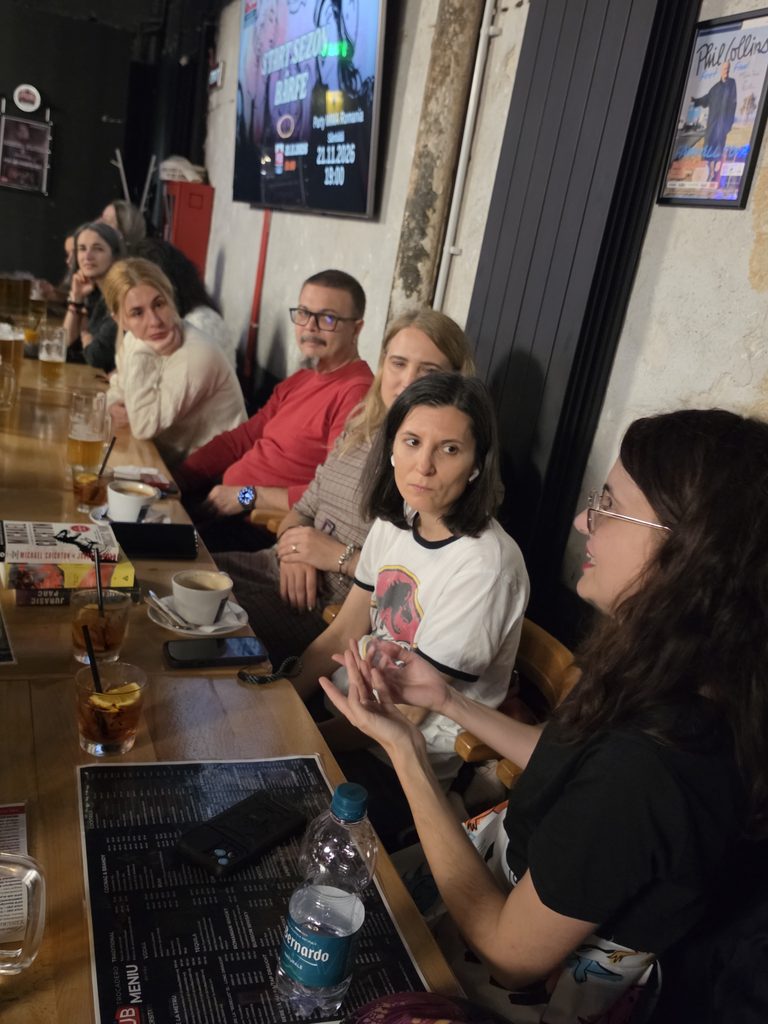
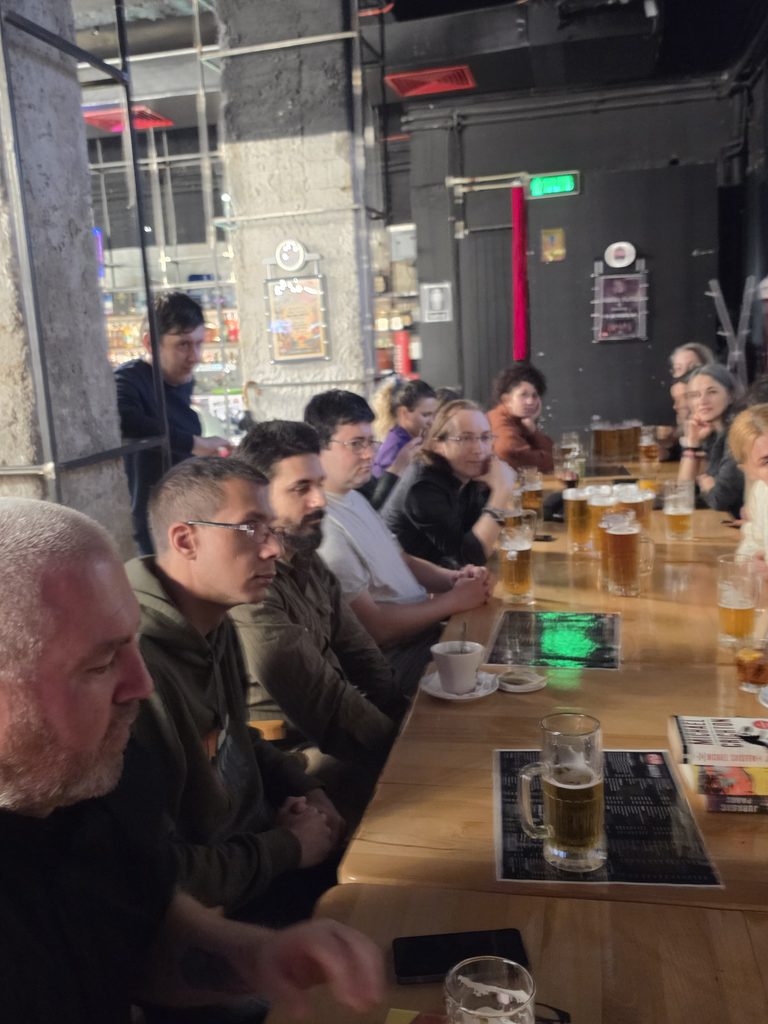
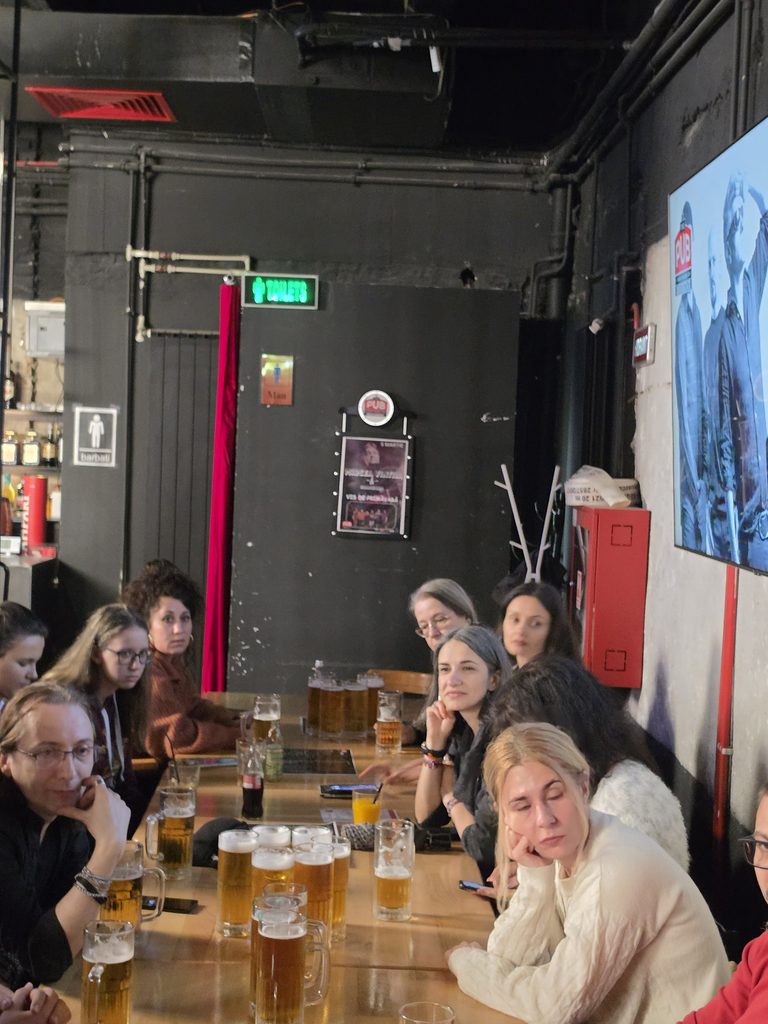
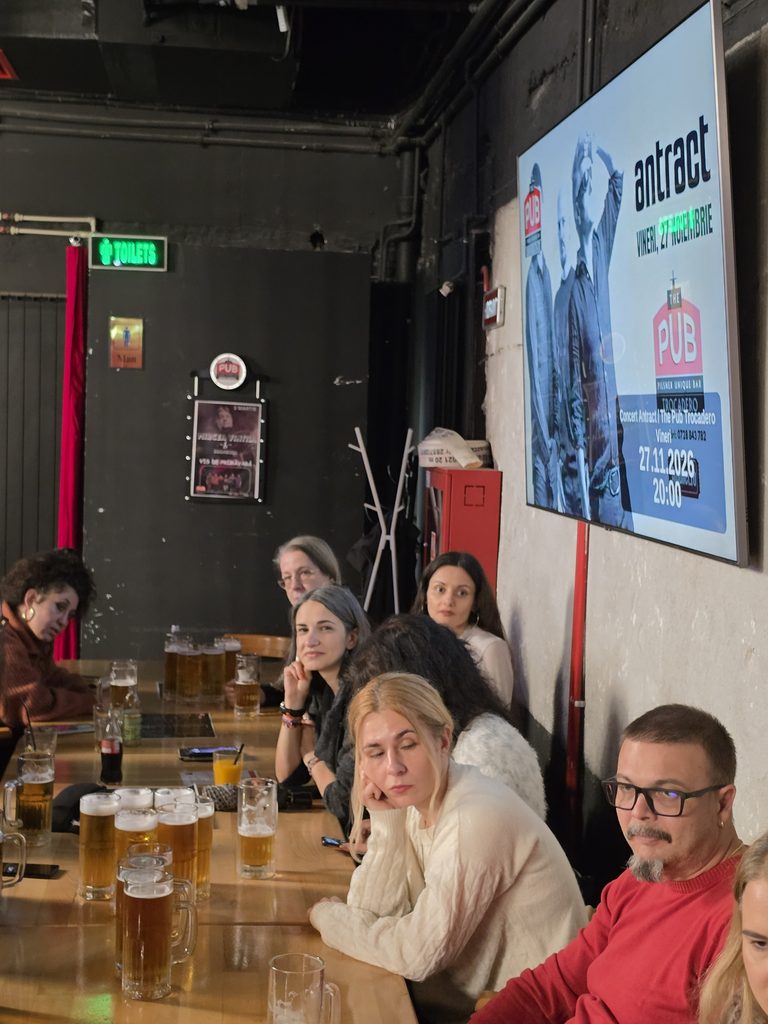
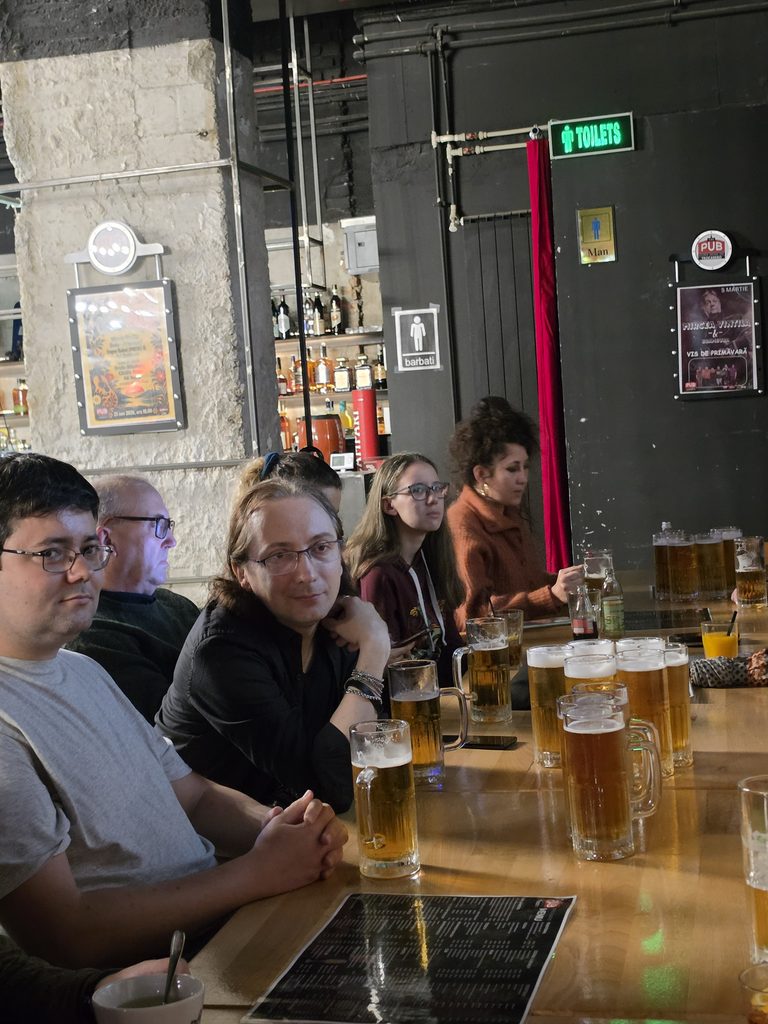
October’s Club Armada meeting, organised by Editura Nemira and dedicated to Michael Crichton’s Jurassic Park, took an unexpected turn. Due to technical difficulties, we ended up holding our discussion at a pub, with beers on the table and dinosaurs on our minds.
Not exactly the original plan, but certainly not a bad alternative!
And as it turned out, Jurassic Park was an excellent choice for a lively discussion, even if we didn’t all agree about the book.
🦖 One Book, Very Different Opinions
What made Club Armada October 2026 particularly interesting was the enormous difference between readers’ reactions to the same novel. One of my favourite things about book clubs is discovering just how differently people can experience the same story.
And Jurassic Park certainly divided opinions.
Some readers agreed with my criticisms. Others absolutely loved the novel, and for some, it remains a firm favourite.
One participant had apparently read it around eleven or thirteen times!
I found that fascinating. Here I was, having struggled through a novel that felt unnecessarily long, while someone else had enjoyed it enough to return to it more than ten times.
My own rating remains 3 out of 5 stars, and that’s being generous.
The problem wasn’t the dinosaurs themselves. I’ve always found these prehistoric animals interesting, and I’m curious about how they lived, behaved and interacted with their environment.
What didn’t work for me was the storytelling.
The lengthy scientific explanations, the inventories of dinosaur species, and the repeated attention to exactly how many specimens existed on the island made parts of the novel feel more like a technical report than an adventure.
Even the action sequences didn’t particularly captivate me.
But listening to readers who genuinely loved those aspects of the book was interesting in its own right.
🎬 Jurassic Park: The Book vs. Spielberg’s Film
Naturally, our conversation also turned to Steven Spielberg’s 1993 adaptation.
And this was one of the most interesting parts of the evening.
Although the film follows the same basic premise, some characters feel remarkably different from their literary counterparts.
John Hammond: A Lovable Grandfather or a Greedy Businessman?
The contrast between the two versions of John Hammond is particularly striking.
In Spielberg’s film, Richard Attenborough portrays Hammond as an enthusiastic, rather lovable grandfather. He dreams of creating something extraordinary, a place where people can experience the impossible.
His ambitions are misguided, and his decisions have disastrous consequences, but there is a warmth to the character.
The Hammond of Crichton’s novel is a very different man.
He is arrogant, greedy and obsessed with the commercial potential of his creation. He has financed an extraordinary scientific achievement without properly understanding what he has unleashed.
And that’s what bothered me most about him.
He wasn’t commissioning statues to be placed around a theme park. He was bringing living creatures into existence, creatures with instincts and behaviours that couldn’t simply be switched off when they became inconvenient.
Ian Malcolm and the Film’s Characters
We also discussed Ian Malcolm, played by Jeff Goldblum, and how the film reshapes and redistributes elements of the novel’s characters.
Malcolm exists in both versions as the mathematician who warns about the dangers of attempting to control complex systems, but the film gives him a particularly memorable personality.
Personally, I remember Goldblum’s performance much more vividly than Malcolm’s portrayal in the book.
It’s a good example of how an adaptation can make a character stand out in ways the original novel didn’t necessarily achieve for every reader.
💭 The Dinosaurs Were Never the Problem
One of the things that stayed with me after reading Jurassic Park was the fate of the dinosaurs themselves.
I felt sorry for them.
Human beings brought these animals into existence, placed them in an artificial environment, expected them to behave according to carefully designed rules, and then decided to destroy them when everything went wrong.
To me, the dinosaurs were treated almost like defective toys.
But they weren’t defective.
They were living creatures behaving according to their nature.
Of course, the situation wasn’t simple. The animals were already finding ways to leave the island aboard supply ships, raising serious questions about what might happen if they reached the mainland.
I understand why their continued existence represented a potential danger.
But understanding the danger doesn’t make their destruction any less tragic.
The responsibility belonged to the people who created the situation, not to the animals themselves.
Hammond’s eventual death felt like an appropriate consequence of his arrogance, but it couldn’t undo the damage.
And perhaps that’s the aspect of Jurassic Park that affected me most, even though I didn’t particularly enjoy the novel.
🍺 Different Opinions, Same Table
Did the discussion change my opinion of Jurassic Park?
No.
I arrived with a three-star opinion of the novel, and I left with exactly the same rating.
I still think the book is unnecessarily long, overloaded with details that didn’t interest me, and less engaging than its premise deserved.
But that’s not a criticism of the people who loved it.
Quite the opposite.
Hearing from readers who were genuinely fascinated by the novel, including someone who had returned to it more than ten times, was part of what made the evening worthwhile.
We didn’t need to convince one another. We could disagree, compare interpretations, talk about the film, and enjoy the conversation.
And sometimes, that’s exactly what a good book club should be.
🦋 Final Thoughts
October’s Club Armada meeting turned out to be a memorable combination of literature, dinosaurs, different perspectives and beer.
The unexpected pub setting added a relaxed touch to an evening devoted to a novel that continues to inspire strong reactions decades after its publication.
Jurassic Park hasn’t become a favourite of mine, and I doubt I’ll be rereading it eleven times.
Club Armada October 2026 reminded me that a great book club discussion doesn’t require everyone to love the book. But I enjoyed the opportunity to discuss it with people who saw something in it that I didn’t.
After all, a book club isn’t about everyone agreeing.
It’s about having something worth talking about.
Next up at Club Armada: Wool (Silozul) by Hugh Howey — November 2026.