
Author Guide | BookFairy
📖 About Neil Gaiman
Neil Gaiman is a British author known for his distinctive blend of fantasy, mythology, horror, folklore and contemporary storytelling. His work spans novels for adults, children’s literature, short stories, graphic novels, poetry, essays and screenwriting.
Born in 1960, Gaiman began his professional career in journalism before establishing himself as an internationally recognised writer.
He is particularly well known for The Sandman, the groundbreaking comic-book series that helped redefine what graphic novels could achieve as a literary medium.
His novels include Neverwhere, Stardust, American Gods, Anansi Boys and The Ocean at the End of the Lane.
He also collaborated with Terry Pratchett on Good Omens, a humorous fantasy novel about an angel, a demon and the approaching apocalypse.
For younger readers, his works include Coraline, The Graveyard Book and Fortunately, the Milk.
One of the defining characteristics of Gaiman’s writing is his ability to make the extraordinary feel unexpectedly ordinary.
Ancient gods live among modern people. Hidden cities exist beneath familiar streets. Children encounter terrifying supernatural forces, while seemingly harmless places conceal entire worlds.
His fiction frequently explores storytelling itself: why people need stories, how myths change over time and why forgotten things sometimes continue to influence the present.
Across different genres and audiences, Gaiman returns to themes of identity, memory, death, childhood, imagination and the fragile boundaries between reality and fantasy.
On BookFairy, I’m exploring Neil Gaiman’s books through spoiler-free reviews, reading recommendations, Romanian editions and guides to his different fictional worlds.
💜 Why I Read Neil Gaiman
One of the things that draws me towards fantasy is its ability to transform ordinary experiences into something strange, meaningful and occasionally frightening.
I particularly enjoy stories inspired by mythology and folklore, especially when familiar elements are reinterpreted in unexpected ways.
Neil Gaiman’s writing is closely associated with this kind of storytelling.
His books often suggest that the world we recognise is only one layer of reality, with older, stranger forces existing just beyond our awareness.
What interests me about this approach is the relationship between the fantastic and the human.
A supernatural creature can represent something deeply familiar. A childhood nightmare can reveal an uncomfortable truth. An apparently insignificant object or place can hold memories that shape an entire life.
That was particularly evident when I read The Ocean at the End of the Lane.
I loved the way Gaiman explored childhood vulnerability through a story that combined familiar domestic settings with ancient and unsettling supernatural forces.
The Hempstock women fascinated me, particularly Lettie, whose confidence and understanding provided such an important contrast to the adults who failed to recognise the narrator’s fear.
I also appreciated the novel’s exploration of memory and the idea that childhood experiences continue influencing us even when we can no longer consciously remember them.
The novel wasn’t without its frustrations. Occasionally, I wanted more explanation of the supernatural world and the rules governing it.
However, I also understood that leaving certain mysteries unresolved was part of the atmosphere Gaiman was creating.
It’s this combination of emotional storytelling, folklore and unsettling imagination that makes me interested in exploring more of his books.
📚 Books Reviewed on BookFairy
My published Neil Gaiman reviews:
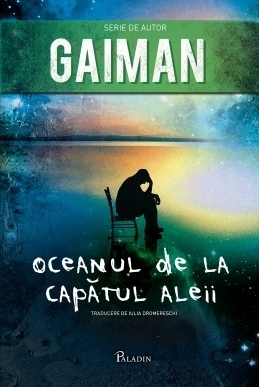
📕 The Ocean at the End of the Lane (2013)
A haunting story about childhood, memory, friendship and the supernatural forces that sometimes enter our lives when we are least prepared for them.
What stayed with me most was Gaiman’s portrayal of childhood vulnerability and the complicated relationship between remembering and forgetting.
I particularly loved Lettie Hempstock and the mysterious women of her family.
I’ll add more reviews here as I continue reading Gaiman’s work.
📚 Neil Gaiman Complete Bibliography
Looking for a complete guide to Neil Gaiman’s published works?
Explore my Neil Gaiman Complete Bibliography, featuring his novels, short-story collections, graphic novels, children’s literature, poetry, nonfiction and collaborative works.
The guide includes publication chronology, recommended reading orders for The Sandman, InterWorld and other connected stories, alongside Romanian editions and links to my BookFairy reviews.
Whether you’re discovering Neil Gaiman for the first time or building your own collection, this bibliography will help you navigate his wonderfully varied body of work.
📖 Neil Gaiman Books and Reading Order
Unlike authors whose work is dominated by one continuous novel series, Neil Gaiman has written across several independent fictional worlds.
Most of his novels can be read as standalones.
However, there are some important connections between certain books and stories.
🌃 Neverwhere and London Below
Neverwhere introduces readers to London Below, a mysterious world existing beneath the familiar streets of the British capital.
Recommended reading:
- Neverwhere (1996)
- How the Marquis Got His Coat Back (2015) — A related short story.
These works share a fictional setting.
Neverwhere is the natural place to begin.
⚡ American Gods and Anansi Boys
American Gods explores the relationship between ancient mythology and modern society.
Anansi Boys takes place in a connected fictional universe but tells its own story.
Recommended reading:
- American Gods (2001)
- Anansi Boys (2005)
Related shorter works include:
- The Monarch of the Glen
- Black Dog
Although the novels can be enjoyed independently, reading American Gods first provides a useful introduction to the wider mythological setting.
🌙 The Sandman
The Sandman is Gaiman’s most influential long-form comic-book series.
It follows Dream, one of the Endless, through stories inspired by mythology, history, literature and the nature of storytelling.
The original series is commonly collected in ten principal volumes:
- Preludes & Nocturnes
- The Doll’s House
- Dream Country
- Season of Mists
- A Game of You
- Fables & Reflections
- Brief Lives
- Worlds’ End
- The Kindly Ones
- The Wake
Additional works include The Sandman: Endless Nights, The Sandman: Overture and The Sandman: The Dream Hunters.
💜 BookFairy Recommendation: If you’re discovering The Sandman for the first time, begin with Preludes & Nocturnes and follow the original ten-volume sequence before exploring the companion works.
📚 InterWorld Trilogy
Neil Gaiman collaborated with Michael Reaves on the first book in the InterWorld series. The later books were developed with the Reaves family.
Reading order:
- InterWorld (2007)
- The Silver Dream (2013)
- Eternity’s Wheel (2015)
The trilogy combines science fiction, alternate realities and fantasy adventure.
⭐ Standalone Novels
Many of Gaiman’s best-known books require no previous reading.
Notable examples include:
- Good Omens (1990) — With Terry Pratchett
- Stardust (1999)
- Coraline (2002)
- The Graveyard Book (2008)
- The Ocean at the End of the Lane (2013)
These works offer different introductions to Gaiman’s storytelling, depending on the kind of fantasy you enjoy.
📜 Short Stories and Mythology
Gaiman has published several collections of shorter fiction.
Among the best-known are:
- Smoke and Mirrors (1998)
- Fragile Things (2006)
- M Is for Magic (2007)
- Trigger Warning (2015)
His shorter fiction ranges from fantasy and horror to literary reinterpretations of mythology and fairy tales.
Gaiman also published Norse Mythology (2017), a prose retelling of traditional Norse myths.
The book introduces figures such as Odin, Thor and Loki through stories drawn from Scandinavian mythological traditions.
For readers who enjoy mythology, it offers another way to explore Gaiman’s approach to traditional storytelling.
🇷🇴 Neil Gaiman Books in Romanian
Neil Gaiman’s works have appeared in Romanian through several publishing houses and imprints, including ART, Arthur, Paladin and Grafic.
The following are some of his best-known translated books.
| English Title | Romanian Title |
|---|---|
| Stardust | Pulbere de stele |
| American Gods | Zei americani |
| Anansi Boys | Băieții lui Anansi |
| The Ocean at the End of the Lane | Oceanul de la capătul aleii |
| Good Omens | Semne bune |
| Coraline | Coraline |
| The Graveyard Book | Cartea cimitirului |
| Fortunately, the Milk | Noroc cu laptele… |
| Norse Mythology | Mitologie nordică |
| Odd and the Frost Giants | Odd și uriașii de chiciură |
| Art Matters | De ce e importantă arta |
Romanian readers can also find translations of The Sandman graphic novels, published under the Grafic imprint.
Some titles have appeared in multiple formats or editions, including illustrated hardbacks, paperbacks and graphic-novel adaptations.
These different editions will be distinguished in the separate complete bibliography rather than counted as entirely new literary works.
⏳ Publication Order or Reading Order?
Neil Gaiman is an unusual case because there isn’t one universal reading order covering everything he has written.
His books include:
- Independent fantasy novels
- Connected fictional worlds
- Graphic-novel series
- Children’s literature
- Short-story collections
- Mythological retellings
- Collaborative works
For standalone novels, publication order isn’t essential.
However, when reading a connected series such as The Sandman or InterWorld, following the intended sequence is important.
For American Gods and Anansi Boys, I recommend reading American Gods first, even though the novels tell separate stories.
Readers who want to explore Gaiman’s entire career can also follow his original publication chronology to see how his writing developed across different genres.
⭐ Where Should You Start?
If you’re completely new to Neil Gaiman, there are several excellent starting points.
🌊 The Ocean at the End of the Lane
A good choice if you enjoy atmospheric fantasy, childhood memories, folklore and stories that blur the boundary between reality and imagination.
This is also the Gaiman novel I’ve already reviewed on BookFairy.
🌃 Neverwhere
An appealing starting point for readers who enjoy urban fantasy, hidden worlds and strange adventures beneath familiar cities.
⚡ American Gods
A strong choice for readers interested in mythology, belief, cultural identity and the survival of ancient traditions in the modern world.
🌟 Stardust
Ideal for readers who enjoy fairy tales, magical journeys and a more traditional fantasy atmosphere.
🖤 Coraline
An excellent introduction to Gaiman’s darker children’s fiction, particularly for readers who appreciate stories that are both imaginative and genuinely unsettling.
💜 BookFairy Recommendation: My suggested starting point is The Ocean at the End of the Lane if you enjoy atmospheric, emotionally driven fantasy. If you prefer a broader adventure with extensive mythological worldbuilding, try American Gods.
💜 My Reading Journey with Neil Gaiman
One of the things I appreciated most about The Ocean at the End of the Lane was the way its supernatural elements grew naturally from familiar childhood experiences.
The story didn’t need an enormous fantasy world to feel powerful.
A house, a garden, a country road and a small pond were enough to create something mysterious and frightening.
I particularly enjoyed the idea that childhood memories can remain part of us even when they seem forgotten.
I also found the contrast between the Hempstock women’s quiet confidence and the narrator’s vulnerability especially effective.
There were moments when I wanted the story to explain more, but its dreamlike atmosphere was also one of its defining strengths.
I’m interested in discovering how Gaiman approaches similar themes in his other novels, particularly those inspired by mythology and folklore.
As I continue reading, I’ll update this guide with new reviews and reflections.
For now, The Ocean at the End of the Lane remains an important part of my experience with his writing—and a book I’d recommend to readers who enjoy fantasy that feels both deeply personal and wonderfully strange.