Science Fiction · Military Science Fiction · Literary Fiction · Short Stories · Poetry
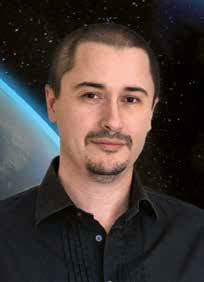
Joe Haldeman is one of the most important writers in modern science fiction, best known for The Forever War, a landmark novel that transformed the way the genre explored military conflict, time, alienation and the human cost of war.
Drawing upon his experiences as a soldier in Vietnam, Haldeman created science-fiction stories that combine imaginative speculation with deeply human concerns.
His literary career extends far beyond his most famous novel. He has written standalone fiction, several science-fiction trilogies, short stories, poetry, war literature and novels set in the Star Trek universe. He has also edited numerous speculative-fiction anthologies.
This BookFairy bibliography brings together his principal works in original publication order, with separate reading guides for his series, significant collected editions, graphic adaptations and documented Romanian translations.
About Joe Haldeman
| Full name | Joe William Haldeman |
| Born | 9 June 1943 |
| Birthplace | Oklahoma City, Oklahoma, USA |
| Nationality | American |
| Literary debut | War Year (1972) |
| Principal genres | Science Fiction, Military Science Fiction, Literary Fiction |
| Other writing | Short Stories, Poetry, Anthology Editing, Screenwriting |
Joe Haldeman studied physics and astronomy before being drafted into the United States Army during the Vietnam War.
He served as a combat engineer and was wounded during his military service, receiving the Purple Heart.
His experiences influenced much of his subsequent writing, particularly his portrayal of soldiers, military institutions, technological warfare and the difficulties of returning to civilian life.
Unlike science fiction that presents interstellar conflict primarily as an exciting adventure, Haldeman frequently examines the psychological and social consequences of war.
His characters often discover that surviving a conflict does not guarantee they can return to the lives they once knew.
He received numerous literary honours, including Hugo and Nebula Awards, and was named a Science Fiction and Fantasy Writers Association Grand Master.
He was inducted into the Science Fiction Hall of Fame in 2012.
1. The Forever War Universe
The Forever War is Haldeman’s most celebrated work and an essential novel of military science fiction.
Its central character, William Mandella, is a soldier fighting an interstellar war against an alien species known as the Taurans.
Because relativistic space travel causes time to pass differently for the soldiers and those remaining on Earth, Mandella discovers that humanity changes dramatically during his absence.
The result is not simply a story about war, but also an exploration of isolation, displacement and the impossibility of returning to an unchanged home.
Reading Order
| Order | Year | Title | Format |
|---|---|---|---|
| 1 | 1974 | The Forever War | Novel |
| 2 | 1999 | A Separate War | Short story |
| 3 | 1999 | Forever Free | Novel |
The Forever War (1974)
The novel follows William Mandella through a military conflict spanning enormous distances and centuries of human history.
His struggle involves not only surviving battle but also adapting to the increasingly unfamiliar society he encounters whenever he returns to Earth.
The book won the Hugo, Nebula and Locus Awards and remains one of the defining works of anti-war science fiction.
A Separate War (1999)
This story follows Marygay Potter after her separation from William Mandella.
It provides an additional perspective on the events and emotional consequences of The Forever War.
Originally published in Far Horizons, it was subsequently included in Haldeman’s collected fiction.
Forever Free (1999)
A direct sequel to The Forever War, this novel returns to William Mandella and Marygay Potter.
It continues their story after the original interstellar conflict, exploring questions of human identity, freedom and the forces shaping civilisation.
Where Does Forever Peace Fit?
Forever Peace (1997) is frequently associated with the Forever War books because of its military science-fiction themes.
However, it is not a direct sequel and does not share the same narrative continuity.
It should be treated as a thematically related standalone novel.
The short story Forever Bound (2010) belongs to the Forever Peace setting.
Collected Edition
Peace and War (2006)
An omnibus containing:
- The Forever War
- Forever Peace
- Forever Free
This edition collects three previously published novels rather than introducing a new instalment.
2. Worlds Trilogy
The Worlds trilogy explores the consequences of political instability, warfare and humanity’s expansion beyond Earth.
| Book | Year | Title |
|---|---|---|
| 1 | 1981 | Worlds |
| 2 | 1983 | Worlds Apart |
| 3 | 1992 | Worlds Enough and Time |
The trilogy follows Marianne O’Hara and examines the relationship between Earth and humanity’s orbital settlements.
The novels should be read in publication order.
Collected Edition
The Worlds Trilogy brings together all three novels in a single edition.
3. Marsbound Trilogy
The Marsbound trilogy follows humanity’s encounters with extraterrestrial intelligence and the consequences of exploration beyond Earth.
| Book | Year | Title |
|---|---|---|
| 1 | 2008 | Marsbound |
| 2 | 2010 | Starbound |
| 3 | 2011 | Earthbound |
Marsbound (2008)
The story introduces Carmen Dula, a young woman whose family travels to Mars.
Her experiences lead to discoveries with profound implications for humanity’s understanding of extraterrestrial life.
Starbound (2010)
The second novel expands the scope of the story beyond Mars, exploring contact with alien intelligence and the risks associated with interstellar exploration.
Earthbound (2011)
The concluding novel returns the consequences of these encounters to Earth, bringing the trilogy’s central conflicts to a conclusion.
Collected Edition
Marsbound / Starbound / Earthbound (2013) collects all three novels.
4. Attar the Merman
Haldeman published two fantasy-adventure novels under the pseudonym Robert Graham.
| Book | Year | Title |
|---|---|---|
| 1 | 1975 | Attar’s Revenge |
| 2 | 1975 | War of Nerves |
Both belong to the Attar the Merman sequence.
Although they differ from the science fiction for which Haldeman is best known, they form part of his original bibliography.
5. Star Trek Novels
Joe Haldeman also contributed two novels to the Star Trek literary universe.
| Year | Title |
|---|---|
| 1977 | Planet of Judgment |
| 1979 | World Without End |
These are tie-in novels set in an existing fictional franchise rather than part of Haldeman’s independently created universes.
6. Standalone Novels and Long Fiction
| Year | Title | Notes |
|---|---|---|
| 1972 | War Year | Vietnam War novel |
| 1976 | Mindbridge | Science-fiction novel |
| 1977 | All My Sins Remembered | Linked science-fiction narrative |
| 1983 | There Is No Darkness | With Jack C. Haldeman II |
| 1987 | Tool of the Trade | Science-fiction thriller |
| 1989 | Buying Time | Also published as The Long Habit of Living |
| 1990 | The Hemingway Hoax | Novella and expanded book edition |
| 1994 | 1968 | Vietnam War novel |
| 1997 | Forever Peace | Standalone military science fiction |
| 2000 | The Coming | Science-fiction novel |
| 2002 | Guardian | Science-fiction novel |
| 2004 | Camouflage | Science-fiction novel |
| 2005 | Old Twentieth | Science-fiction novel |
| 2007 | The Accidental Time Machine | Time-travel science fiction |
| 2014 | Work Done for Hire | Science-fiction thriller |
War Year (1972)
Haldeman’s debut novel draws directly upon his experiences of the Vietnam War.
Unlike much of his later fiction, it approaches military conflict through a contemporary setting rather than an imagined future.
Mindbridge (1976)
A novel exploring alien communication, space exploration and the consequences of extraordinary scientific discoveries.
All My Sins Remembered (1977)
A connected narrative about an operative whose missions involve psychological transformation and moral compromise.
There Is No Darkness (1983)
Written with Haldeman’s brother, Jack C. Haldeman II.
Buying Time (1989)
A science-fiction novel exploring longevity, wealth and the implications of extending human life.
The novel was also published under the title The Long Habit of Living.
These are alternative titles for the same work, not separate novels.
The Hemingway Hoax (1990)
A science-fiction story combining literary history, alternative realities and the mystery surrounding Ernest Hemingway’s lost manuscripts.
Forever Peace (1997)
Set in a future transformed by military technology and remote warfare, Forever Peace examines violence, technological control and the possibility of ending conflict.
It won major science-fiction awards, including the Hugo and Nebula.
Camouflage (2004)
A science-fiction novel involving mysterious beings capable of changing their appearance and living among humans.
It received the Nebula Award and the James Tiptree Jr. Award.
The Accidental Time Machine (2007)
A novel centred on an unexpected technological discovery that enables travel into the future.
Work Done for Hire (2014)
A science-fiction thriller involving a writer drawn into a dangerous situation that blurs the boundaries between his professional assignment and reality.
7. Short Story Collections
Short fiction has played an important role throughout Haldeman’s literary career.
His stories frequently explore war, technology, alienation, time, relationships and the limits of human understanding.
| Year | Title |
|---|---|
| 1978 | Infinite Dreams |
| 1985 | Dealing in Futures |
| 1993 | Vietnam and Other Alien Worlds |
| 1996 | None So Blind |
| 2006 | A Separate War and Other Stories |
| 2013 | The Best of Joe Haldeman |
Other Important Collected Volumes
- War Stories (2005/2006) — collects Vietnam-related fiction and other material, including earlier novels.
- Saul’s Death and Other Poems (1997) — poetry collection.
- More than the Sum of His Parts (1991) — standalone edition of a short story.
Selected Short Fiction
Among Haldeman’s notable shorter works are:
| Year | Title |
|---|---|
| 1975 | Anniversary Project |
| 1976 | Tricentennial |
| 1985 | More than the Sum of His Parts |
| 1993 | Graves |
| 1995 | None So Blind |
| 1999 | A Separate War |
| 2005 | Angel of Light |
| 2010 | Forever Bound |
Graves and None So Blind received major recognition within the science-fiction and fantasy community.
Many of Haldeman’s shorter works have been reprinted in multiple magazines, anthologies and retrospective collections.
8. Poetry
In addition to fiction, Haldeman has published poetry, including works influenced by war, memory and personal experience.
Poetry Collection
Saul’s Death and Other Poems (1997)
Selected Poems
- Rounder (2013)
- Ecopoiesis (NIAC Symposium 2015)
His poetry has appeared in specialist publications and forms a smaller but important part of his literary output.
9. Anthologies Edited by Joe Haldeman
Haldeman has also worked as an editor, selecting fiction by other writers for themed anthologies.
| Year | Title | Co-editors |
|---|---|---|
| 1974 | Cosmic Laughter | — |
| 1977 | Study War No More | — |
| 1983 | Nebula Award Stories Seventeen | — |
| 1986 | Body Armor: 2000 | Martin H. Greenberg and Charles G. Waugh |
| 1987 | Supertanks | Martin H. Greenberg and Charles G. Waugh |
| 1988 | Spacefighters | Martin H. Greenberg and Charles G. Waugh |
| 2007 | Future Weapons of War | Martin H. Greenberg |
These anthologies should be distinguished from books containing fiction written entirely by Haldeman.
10. Nonfiction and Other Writing
Haldeman’s published work also includes autobiographical writing, essays and material concerning warfare and the craft of writing.
His experiences in Vietnam strongly influenced both his fiction and nonfiction.
Important publications and collected material include:
- Vietnam and Other Alien Worlds (1993)
- War Stories (2005/2006)
- The Novel as Joy Ride (2005)
His nonfiction contributions should be considered alongside his literary fiction when examining the full development of his ideas about war and society.
11. Graphic Novels and Comics
Several of Haldeman’s works have been adapted into graphic narratives.
The Forever War
Adapted with artwork by Belgian artist Marvano, the graphic version was originally published in French as La Guerre éternelle during 1988–1989.
Forever Free
The sequel also received a graphic adaptation illustrated by Marvano.
Dallas Barr
A comic series created with Marvano and based on the concepts of Buying Time.
These adaptations present existing stories or settings in another medium and should not be counted as new prose novels.
12. Major Omnibus and Collected Editions
| Year | Title | Contents |
|---|---|---|
| 2006 | Peace and War | The Forever War, Forever Peace, Forever Free |
| 2013 | Marsbound / Starbound / Earthbound | Marsbound trilogy |
| 2013 | The Best of Joe Haldeman | Selected short fiction |
| Various editions | The Worlds Trilogy | Complete Worlds trilogy |
These collections are especially useful for readers and collectors who prefer complete series in fewer volumes.
However, they reproduce previously published works and are therefore listed separately from the original bibliography.
13. Joe Haldeman in Romanian Translation
Several of Joe Haldeman’s science-fiction novels have been translated into Romanian, with editions published by Teora, Pygmalion and Nemira.
The following catalogue identifies four original works with documented Romanian translations, distinguishing each novel from its subsequent editions and reprints.
Romanian Translations
| Original Title | Romanian Title | Original Year | Romanian Publisher & Edition Year |
|---|---|---|---|
| Mindbridge | Conexiunea PSI | 1976 | Teora, 1995 |
| The Forever War | Războiul etern | 1974 | Pygmalion, 1998/1999; Nemira, 2015; Armada, 2023 |
| Forever Peace | Pacea eternă | 1997 | Teora, 1999; Nemira, 2016 |
| Camouflage | Camuflaj | 2004 | Nemira, 2007 |
Conexiunea PSI — Mindbridge
Romanian publisher: Teora
Publication year: 1995
Translator: Mihai-Dan Pavelescu
Originally published in English in 1976, Mindbridge explores humanity’s encounters with alien worlds and the consequences of extraordinary scientific discoveries.
The Romanian translation appeared under the title Conexiunea PSI in 1995.
Războiul etern — The Forever War
Original publication: 1974
Romanian title: Războiul etern
Translator: Mihai-Dan Pavelescu
Documented Romanian editions include:
- Pygmalion (1998/1999) — Cyborg collection.
- Nemira (2015) — Science Fiction & Fantasy collection.
- Nemira / Armada (2023) — Armada collection.
The 2023 Armada edition has 280 pages and ISBN 978-606-43-1648-6.
The Forever War follows William Mandella, a soldier whose participation in an interstellar conflict exposes him to the effects of relativistic time dilation.
While only months pass for Mandella, centuries can pass on Earth, transforming his return home into an experience of profound cultural and personal alienation.
The novel draws upon Haldeman’s experiences during the Vietnam War and remains one of the most influential works of military science fiction.
Pacea eternă — Forever Peace
Original publication: 1997
Romanian title: Pacea eternă
Documented Romanian editions include:
- Teora (1999) — SF collection.
- Nemira (2016) — Nautilus collection; translated by Mihai-Dan Pavelescu.
The 2016 Nemira edition carries ISBN 978-606-758-765-4.
Forever Peace imagines a future in which soldiers operate sophisticated military machines remotely through neural connections.
Although thematically related to The Forever War, it is not a direct sequel and takes place in a separate fictional continuity.
The novel explores the consequences of advanced warfare, human aggression and the possibility of achieving lasting peace.
Camuflaj — Camouflage
Original publication: 2004
Romanian title: Camuflaj
Romanian publisher: Nemira
Publication year: 2007
Translator: Gabriel Stoian
ISBN: 978-973-569-879-9
Camouflage follows two mysterious, seemingly immortal extraterrestrial entities capable of changing their appearance.
Living among humans across different historical periods, they gradually become involved in events surrounding an extraordinary discovery beneath the ocean.
The novel combines science fiction, mystery and questions about identity, adaptation and humanity’s place in the universe.
Romanian Publishing History
The Romanian bibliography is organised by original literary work rather than by individual cover design or reprint.
When the same novel has appeared through several publishers or imprints, its publishing history is recorded together under a single original title.
This distinction allows readers and collectors to identify the available Romanian translations without confusing reissues with entirely different works.ppeared through different publishers, its publishing history can be recorded without duplicating the work in the main bibliography.
14. Where to Start Reading Joe Haldeman
With several series and standalone novels available, readers can choose different starting points depending on their interests.
For Classic Science-Fiction Readers
The Forever War (1974)
The essential starting point and Haldeman’s most influential novel.
For Readers Interested in Artificial Intelligence and Identity
Camouflage (2004)
A standalone novel exploring extraordinary beings and the boundaries of human identity.
For Time-Travel Enthusiasts
The Accidental Time Machine (2007)
A science-fiction adventure exploring the consequences of travelling into the future.
For Readers Interested in War and Technology
Forever Peace (1997)
A thematically related companion to The Forever War, examining military technology and the possibility of ending warfare.
For Readers Who Prefer Short Fiction
The Best of Joe Haldeman (2013)
A retrospective selection offering an introduction to his shorter works.
15. Joe Haldeman’s Literary Legacy
Joe Haldeman occupies a distinctive place in the history of science fiction.
His experiences as a soldier gave his writing an unusually personal understanding of military life and the consequences of war.
Through The Forever War, he challenged the familiar image of the heroic space soldier and presented interstellar warfare as an experience characterised by disorientation, loss and profound social change.
The novel’s treatment of relativistic time also becomes a powerful metaphor for the alienation felt by soldiers returning to societies that have changed during their absence.
Across his other books, Haldeman has continued exploring the relationship between human beings and technological progress.
His fiction addresses artificial intelligence, space exploration, immortality, identity, cultural change and the ways scientific discoveries can transform everyday life.
His work remains influential because its imaginative concepts are consistently connected to human experience.
Final Thoughts
Joe Haldeman’s bibliography demonstrates the remarkable range of a writer whose career extends across decades of science-fiction history.
Although The Forever War remains his most famous achievement, his other novels, trilogies, short stories and literary collaborations reveal an author interested in far more than military conflict.
His stories explore what happens when people are forced to adapt to unfamiliar worlds, technologies and societies.
Whether writing about interstellar soldiers, alien intelligence, time travel or the aftermath of war, Haldeman consistently returns to the human consequences of extraordinary events.
For readers discovering classic science fiction, his books offer both imaginative adventures and thoughtful examinations of the societies that create them.
For collectors, his extensive bibliography provides a rewarding journey through several generations of speculative fiction.
Sources and Further Reading
- Joe Haldeman — Author Biography: https://sites.google.com/site/joehaldemansf/biography
- The Encyclopedia of Science Fiction: https://sf-encyclopedia.com/entry/haldeman_joe
- Internet Speculative Fiction Database: https://www.isfdb.org/
- Science Fiction and Fantasy Writers Association: https://nebulas.sfwa.org/grand-masters/joe-haldeman/
- Penguin Random House: https://www.penguinrandomhouse.com/authors/11537/joe-haldeman/
- Nemira: https://nemira.ro/razboiul-etern-joe-haldeman