 Historical Fiction
 Literary Fiction
 Young Adult

📝 First Impressions
There are books that entertain us, books that impress us and books that remain somewhere inside us long after we have finished reading them. The Book Thief belongs firmly to the last category.
I have read this novel at least twice, and I have also seen the film adaptation. Yet every time I return to Liesel Meminger’s story, it feels emotionally immediate. I already know where the story is going, but that knowledge does not make it easier. If anything, rereading the book makes its most painful moments even more powerful, because I notice the small details, the quiet acts of kindness and the inevitable losses waiting beneath the surface.
Set in Nazi Germany during the Second World War, the novel follows Liesel, a young girl whose life is transformed by books, words and the people she meets. She loses her family, is sent to live with foster parents and slowly discovers that books can become a refuge, a weapon and a way of understanding the world.
But the most unusual element of the novel is its narrator: Death.
Not the skeletal figure with a scythe that popular imagination has given us, but a tired, observant and strangely compassionate presence. Death watches humanity during one of its darkest periods and becomes fascinated by the way people can be both unbearably cruel and extraordinarily kind.
💜 What I Loved
The narration is the book’s greatest achievement. Markus Zusak gives Death a distinct personality without making the character feel artificial or gimmicky. Death is weary, curious and sometimes almost apologetic. He has a job to do, but he is deeply affected by the people whose souls he collects.
That perspective creates an extraordinary contrast. Death has seen everything, yet human beings still surprise him. He is especially drawn to Liesel because she is a survivor, a reader and a thief of words. Through her, he begins to understand the power language can have over people.
Words can be used to spread hatred and manipulate entire nations. They can also comfort a frightened child, preserve a memory or bring two lonely people closer together. Liesel gradually learns that words are never neutral. They can destroy, but they can also save.
Liesel herself is a wonderful protagonist. She is not heroic in a conventional way. She is a child trying to survive circumstances she cannot fully understand. Her grief, anger, stubbornness and curiosity make her feel completely real. Her relationship with books develops slowly, beginning with a book she cannot yet read and growing into something much deeper. Reading becomes her way of holding on to the people and places she has lost.
I also loved the relationships at the centre of the story.
Hans Hubermann is one of the most beautiful characters in the novel. His patience, gentleness and quiet courage make him unforgettable. He does not make grand speeches or seek recognition. He simply chooses kindness, again and again, even when kindness is dangerous.
Rosa Hubermann is much more complicated. Her harsh language and rough exterior initially make her difficult to like, but the more we see of her, the more we understand that her love is expressed through practical care rather than tenderness. She is not soft, but she is loyal.
Then there is Rudy Steiner, Liesel’s best friend, who brings warmth, humour and heartbreak to the story. Rudy is funny, impulsive and deeply devoted to Liesel. His presence gives the novel some of its lightest moments, which makes the darker ones even more painful.
Max Vandenburg’s story adds another emotional layer. Hidden in the Hubermanns’ basement, Max is physically isolated but becomes connected to Liesel through stories, drawings and shared imagination. Their friendship is one of the quietest and most moving parts of the novel.
The book also captures the absurdity of war. There are moments of terror, but there are also moments of ordinary life: arguments, jokes, games, small celebrations and children trying to make sense of adult madness. That mixture makes the setting feel human rather than historical in a distant, abstract way.
🤔 What Didn’t Quite Work for Me
There is very little I would change about the novel, but the structure can occasionally feel unusual and interrupted. Death often reveals information before the story reaches that point, including details about what will happen to certain characters. For some readers, this may reduce the suspense.
For me, it creates a different kind of tension. The question is not always what will happen, but how the characters will reach that moment and what their lives will mean before they do. Still, I understand why some readers might find the constant interruptions and anticipatory comments distracting.
The novel is also emotionally demanding. It moves between humour, tenderness and devastation, sometimes within a very short space. That emotional contrast is one of its strengths, but it can also make the reading experience exhausting.
The film adaptation captures some of the atmosphere and central relationships beautifully, but the book remains far richer. The film cannot reproduce Death’s full narrative voice or the same depth of attention given to language, memory and storytelling. It is a moving adaptation, but the novel offers a much more complete experience.
👥 Who Would Enjoy This Book?
The Book Thief is ideal for readers who enjoy historical fiction with a strong literary voice, unforgettable characters and emotional depth.
It would appeal to readers interested in:
- stories set during the Second World War;
- novels narrated from an unusual perspective;
- books about reading, language and the power of storytelling;
- emotionally complex coming-of-age stories;
- friendships and family relationships formed under impossible circumstances;
- novels that balance humour with grief.
This is not a light or easy book, but it is also not without hope. Readers who appreciate books that make them cry, think and look at familiar ideas from a different angle will probably find a great deal to admire here.
💭 Final Thoughts
I have read many books about war, Nazi Germany and the suffering of civilians, but I have never encountered one quite like The Book Thief. Its greatest strength is not simply the historical setting or the tragedy of Liesel’s life. It is the way the story transforms Death into a witness, a storyteller and, unexpectedly, someone capable of pity.
The novel reminds us that even in the worst circumstances, people continue to create small moments of beauty. They share food, tell stories, paint words on walls, protect one another and try to remain human when the world is doing everything possible to take that humanity away.
Liesel is a book thief, but she is also a keeper of memories. Through books and words, she preserves the people she loves and gives meaning to experiences that would otherwise disappear. That is what makes the novel so powerful: it is ultimately not only a story about death, but also a story about memory, love, courage and the stubborn persistence of life.
The Book Thief is heartbreaking, beautifully written and unforgettable. It is the kind of book I can return to years later and still find something new waiting between the pages.
✨ The BookFairy Verdict
The Book Thief
📖 Book Details
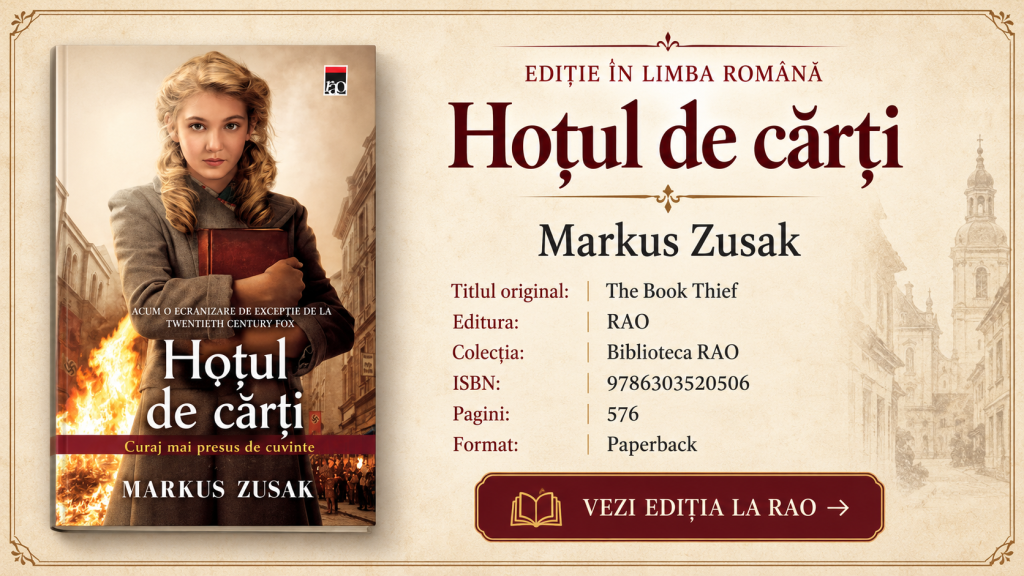
- Title: The Book Thief
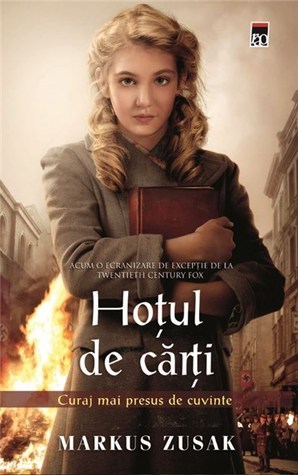
- Romanian Title: Hoțul de cărți
- Author: Markus Zusak
- Series: Standalone
- Genre: Historical Fiction, Literary Fiction, Young Adult
- Publisher (EN): Alfred A. Knopf
- Publisher (RO): RAO
- Published (EN): 2005
- Published (RO): 2025
- Pages (EN): 560
- Pages (RO): 576
- Format Experienced: Paperback
- Edition Owned: Romanian RAO edition — Biblioteca RAO
🛒 Buy the Book
If The Book Thief sounds like your kind of read, you can support BookFairy by purchasing the book through the links below. It won’t cost you anything extra, and using these links helps support the site while allowing me to continue creating honest, independent book reviews.