 Children

📝 First Impressions
The Witches is probably one of the Roald Dahl books that best demonstrates just how dark children’s fiction can become without losing its sense of fun.
The premise is wonderfully disturbing: witches are real, they live among ordinary people, and they absolutely hate children.
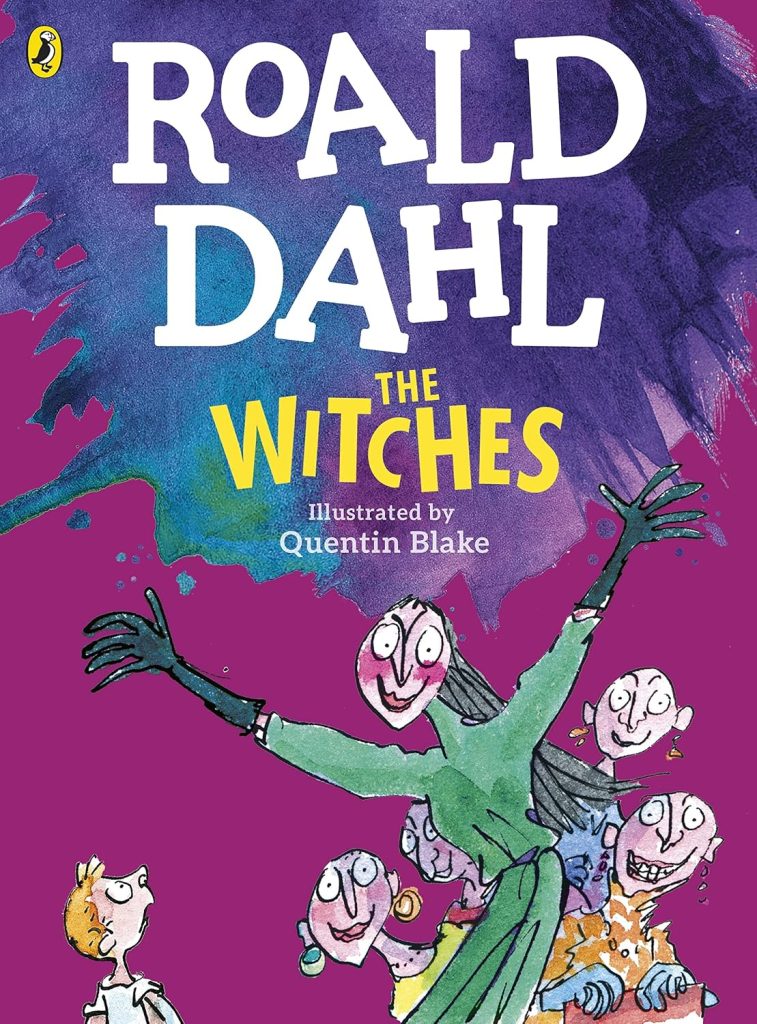
Not in the exaggerated, fairy-tale sense of simply being unpleasant to them. Dahl’s witches genuinely want children gone, and the details he gives you about how to recognise them — the gloves, the wigs, the square feet, the strange noses — are exactly the kind of things that can lodge themselves in a child’s imagination for years.
That mixture of horror and humour is something Dahl does extremely well.
The story begins with a boy and his grandmother, and I immediately liked the grandmother. She understands witches, knows their habits and treats the subject with complete seriousness. There is something wonderfully strange about an adult calmly explaining that witches exist and that encountering one can be genuinely dangerous.
Then, of course, the story takes the worst possible turn when the boy accidentally finds himself in the middle of a gathering of witches.
And not just any witches.
The Grand High Witch herself is there, presenting a plan to eliminate children on an enormous scale.
It is grotesque, ridiculous and genuinely creepy at the same time.
That is probably what I remember most clearly about The Witches: the feeling that Dahl was never particularly interested in protecting children from frightening ideas.
He trusted them to enjoy being scared.
And while this was not one of my favourite Roald Dahl books overall, I can absolutely understand why it became one of his most memorable.
💜 What I Loved
What I enjoyed most about The Witches was the way Roald Dahl balances fear with humour.
The story is genuinely creepy in places. The witches are not harmless or misunderstood. They are dangerous, they hate children, and the Grand High Witch’s plan is horrifying when you actually stop to think about it.
But Dahl never allows the book to become too heavy.
There is always something absurd nearby: the exaggerated descriptions, the ridiculous behaviour of the witches, the strange rules surrounding them, or the way adults completely fail to notice what is happening.
That contrast works extremely well.
I also really liked the grandmother.
She is probably my favourite character in the book because she treats the boy with respect. She does not dismiss what he sees, she does not tell him he is imagining things, and she never behaves as if being a child means he should be protected from the truth.
Instead, she prepares him.
There is something very reassuring about that relationship, especially in a story where almost every other adult seems oblivious to the danger.
The Grand High Witch is another highlight.
She is grotesque, dramatic and completely excessive, but that is exactly what makes her memorable. Dahl’s villains are rarely subtle, and I do not think they need to be.
They are designed to be hated.
And because they are so exaggerated, watching children outsmart them becomes incredibly satisfying.
I also appreciated the fact that the story does not suddenly become safe once the boy understands what is happening.
Dahl is willing to let consequences remain consequences.
That gives the book a slightly darker edge than many children’s stories, and I think that is one of the reasons it stays memorable.
There is always the sense that being clever and brave matters because the danger is real.
🤔 What Didn’t Quite Work for Me
Even though I enjoyed the atmosphere and Dahl’s wonderfully grotesque idea of witches hiding among ordinary people, The Witches did not connect with me as strongly as some of his other books.
Part of that is probably because the story feels more focused on the concept than on the characters.
The grandmother is memorable, and the Grand High Witch certainly makes an impression, but beyond them I did not feel especially attached to the rest of the cast. The plot moves quickly from one strange or frightening situation to another, and that keeps the book entertaining, but it also means there is not much space for deeper character development.
I also found some of the humour less effective than in other Roald Dahl books.
His exaggerated descriptions and deliberately disgusting details are part of his style, and usually I enjoy that enormously. Here, though, some of it felt slightly repetitive after a while. Once the rules about witches are established and the Grand High Witch appears, the story becomes quite predictable in the way it builds toward confrontation.
That does not make it boring.
But I rarely felt surprised.
I also think the transformation at the centre of the story creates an interesting problem. It is imaginative and certainly memorable, but emotionally I expected it to affect me more than it did.
Dahl treats extraordinary events with such matter-of-fact confidence that the story almost immediately moves on to the practical consequences. That works perfectly for the tone, but it also kept me slightly detached from what was happening.
And while I admire the fact that Dahl refuses to give the story an overly neat, sentimental resolution, the ending did not leave the same emotional impact on me as the relationship between Danny and his father in Danny, the Champion of the World.
For me, The Witches was clever, dark and entertaining.
It just never became one of the Roald Dahl stories I felt particularly attached to.
👥 Who Would Enjoy This Book
The Witches will probably work best for readers who enjoy children’s stories with a genuinely dark edge.
If you like books where the villains are grotesque, exaggerated and completely unapologetic about being evil, Roald Dahl delivers exactly that here.
It is also a good choice for readers who enjoy stories that mix fear with humour. The witches are frightening, but the book is never relentlessly grim. There is always something absurd, strange or ridiculous happening alongside the danger.
Readers who like strong child-and-grandparent relationships may also enjoy the bond between the boy and his grandmother. She is one of the most reassuring parts of the story because she takes him seriously and never dismisses what he knows.
I would especially recommend it to children who enjoy being a little scared.
Dahl does not soften the danger too much, and I think that is part of the fun. The book trusts younger readers to handle creepy ideas without wrapping everything in safety.
On the other hand, readers who prefer warmer, more emotionally driven stories may connect more strongly with some of Dahl’s other books.
For me, The Witches was entertaining and memorable in concept, but it never became one of the Roald Dahl stories I felt deeply attached to.
💭 Final Thoughts
The Witches is one of Roald Dahl’s darker children’s books, and I think that is exactly why it has remained so memorable.
The idea of witches hiding in plain sight is wonderfully unsettling, especially because Dahl gives children a whole set of strange little rules for recognising them. Gloves, wigs, unusual feet, an ability to smell children — all of those details turn something impossible into something that almost feels plausible.
That is where the book is strongest.
It takes a frightening idea and treats it with complete confidence.
I also think the relationship between the boy and his grandmother gives the story the warmth it needs. Without her, the book could easily become nothing more than a sequence of grotesque jokes and frightening situations. Instead, there is always someone beside him who understands the danger and believes him.
At the same time, this was never one of the Dahl books I loved most.
I enjoyed the premise, the Grand High Witch and the darker humour, but I did not feel especially attached to the story once I finished it.
For me, the concept is more memorable than the emotional experience.
Still, I appreciate how little Dahl talks down to children here.
He allows the villains to be genuinely frightening. He allows consequences to remain consequences. And he never seems particularly interested in making the world completely safe again before closing the book.
That gives The Witches a slightly unsettling quality that many modern children’s books would probably soften.
I may not love it as much as some of his other stories, but I can absolutely understand why it has frightened, entertained and fascinated generations of readers.
✨ The BookFairy Verdict
The Witches
📖 Book Details
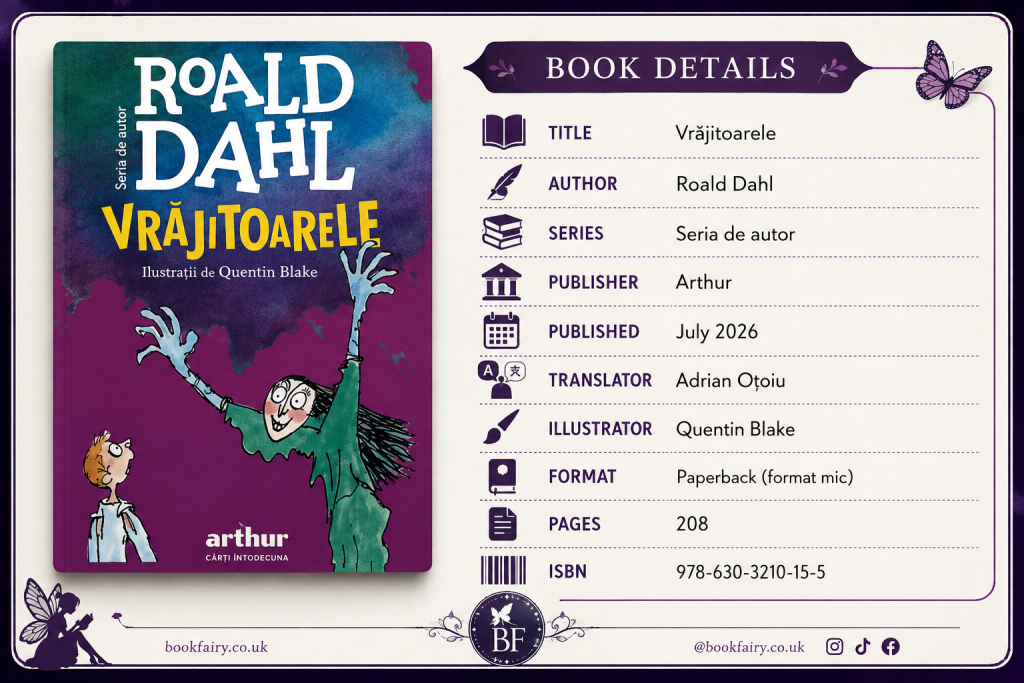
Title: The Witches
Romanian Title: Vrăjitoarele
Author: Roald Dahl
Series: Standalone
Genre: Children’s Fiction
Original Publisher: Jonathan Cape
First Published: 1983
Romanian Publisher: Arthur
Translator: Adrian Oțoiu
Illustrator: Quentin Blake
Format: Hardcover
🛒 Buy the Book
If The Witches sounds like your kind of book, you can support BookFairy by purchasing it through the links below. It won’t cost you anything extra, and using these links helps support the site while allowing me to continue creating honest, independent book reviews.
📚 Waterstones
📦 Amazon UK
📱 Kobo
📘 eBook