 Science-Fiction

📝 First Impressions
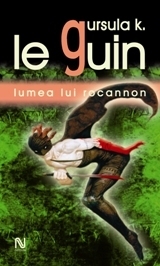
Rocannon’s World is one of those books that feels much larger than its size. Ursula K. Le Guin takes the basic shape of a space adventure and fills it with questions about politics, culture, power and the consequences of interference. The novel is set on a distant world inhabited by several very different societies, each with its own history, traditions and understanding of power.
What interested me most was the political dimension of the story. This is not simply a tale about one man travelling through an exotic world and facing danger. It is also a story about competing interests, fragile alliances and the way apparently distant conflicts can become deeply personal. The world feels shaped by political decisions, social hierarchies and the consequences of people trying to control one another.
Even though I do not remember every detail of the plot, the atmosphere and central ideas stayed with me. There is something dreamlike about the novel, but also something surprisingly sharp beneath its fairy-tale surface.
💜 What I Loved
The strongest element for me was the way Le Guin combines science fiction with the structure and atmosphere of myth. The book contains spaceships, interstellar communication and advanced technology, but it also has castles, ancient legends, strange creatures, warriors and isolated communities. These elements should feel incompatible, yet Le Guin makes them work together naturally.
I especially appreciated the sense that this world has not been created merely as a backdrop for the protagonist. It has its own cultures and internal divisions. The people Rocannon encounters are not simply “aliens” in the conventional science-fiction sense. They belong to societies with different values, different social structures and different relationships with authority. That makes the political conflicts much more interesting because they are connected to the way each culture understands itself.
The novel also explores the uncomfortable position of an outsider who arrives with knowledge and assumptions that do not necessarily apply to the people he meets. Rocannon may understand aspects of the larger interstellar world, but that does not mean he automatically understands the planet itself. His journey becomes a process of learning, adapting and recognising that knowledge does not always equal wisdom.
Le Guin’s writing is beautiful without being excessive. Her prose gives the story a lyrical, almost legendary quality, but she never loses sight of the larger questions. The landscape, the strange beings and the communities Rocannon encounters all contribute to the feeling that this is an ancient story being told through the language of science fiction.
I also loved the book’s sense of scale. The events are personal, political and interstellar at the same time. A decision made by one person can affect an entire population. A conflict that seems local can be connected to larger forces beyond the planet. That combination gives the novel a quiet intensity.
🤔 What Didn’t Quite Work for Me
The book can feel distant at times. Le Guin introduces a great deal of history, culture and world-building, and not every element receives the same amount of emotional development. Some characters and societies are fascinating, but I occasionally felt that I was observing them from the outside rather than becoming fully immersed in their individual experiences.
The structure also has a slightly uneven quality. It moves between the feeling of a traditional fantasy quest and the more abstract concerns of political science fiction. I enjoyed that combination overall, but it may not work equally well for every reader. Those expecting a fast-paced space opera might find the novel too reflective, while readers looking for a fully developed fantasy world might wish for more detail about certain cultures and relationships.
There is also a certain emotional distance in the storytelling. That distance contributes to the book’s intellectual strength, but it sometimes makes the narrative less immediately gripping. The political ideas were what held my attention most strongly, whereas some of the more conventional adventure elements felt less memorable.
This is a novel that asks the reader to pay attention to systems, history and cultural difference. It is not always interested in delivering quick emotional rewards or straightforward explanations. For me, that made it more rewarding in the long run, but it also meant that some parts felt less vivid than others.
👥 Who Would Enjoy
I would recommend Rocannon’s World to readers who enjoy classic science fiction with strong world-building and political themes. It is a good choice for anyone interested in stories about first contact, cultural differences, interstellar conflict and the relationship between power and responsibility.
Readers who enjoy Ursula K. Le Guin’s other Hainish novels will probably appreciate this early work, especially for the ideas it introduces about societies, communication and the dangers of assuming that one worldview is universal. It may also appeal to readers who enjoy science fiction that borrows from mythology and fantasy rather than focusing exclusively on technology.
This is probably not the best choice for someone looking for a relentlessly fast-paced adventure or a character-driven novel with a large cast whose inner lives are explored in great detail. The book is more interested in atmosphere, political structures and the meeting of different cultures.
💭 Final Thoughts
Rocannon’s World is a thoughtful and imaginative early science-fiction novel that blends space travel, mythology, politics and cultural conflict. What stayed with me most was not one particular plot twist, but the atmosphere of the world and the way Le Guin presents power as something that shapes entire societies.
The political side of the novel was especially engaging for me. I liked the attention given to alliances, social structures and the consequences of decisions made by people who believe they understand more than they actually do. Even when the story felt distant, its ideas remained compelling.
This is not a perfect novel, and some sections felt less emotionally immediate than others. However, it is imaginative, ambitious and full of the kind of questions that make classic science fiction worth revisiting. Le Guin was already exploring the relationship between politics, culture and identity with remarkable intelligence, and Rocannon’s World remains an intriguing example of how much can be achieved in a relatively short book.
✨ The BookFairy Verdict
Rocannon’s World
📖 Book Details
- Title: Rocannon’s World
- Romanian Title: Lumea lui Rocannon
- Author: Ursula K. Le Guin
- Series: Hainish Cycle / Ekumen
- Series Order: Book 1
- Genre: Science Fiction
- Publisher (EN): Ace Books
- Publisher (RO): Nemira
- Published (EN): 1966
- Published (RO): 2006
- Pages (EN): 162
- Pages (RO): 160
- Format Experienced: Paperback
- Edition Owned: Romanian paperback
- Translator: Mihai-Dan Pavelescu
Hainish Cycle / Ekumen books, are, in order of publishing:
- Rocannon’s World (1966) — Lumea lui Rocannon
- Planet of Exile (1966)
- City of Illusions (1967) — Orașul iluziilor
- The Left Hand of Darkness (1969) — Mâna stângă a întunericului
- The Word for World Is Forest (1972)
- The Dispossessed (1974) — Deposedații
- The Telling (2000)
🛒 Buy the Book
If Rocannon’s World sounds like your kind of read, you can support BookFairy by purchasing the book through the links below. It won’t cost you anything extra, and using these links helps support the site while allowing me to continue creating honest, independent book reviews.