 Mystery

📝 First Impressions
Some books are enjoyable while you are reading them. Others stay with you long after you have finished the last page. And then there are the rare books that make you want to find everything else their author has written.
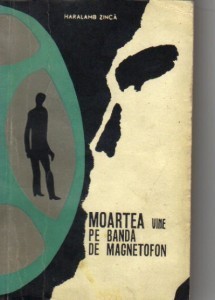
That was my experience with Moartea vine pe bandă de magnetofon by Haralamb Zincă.
I loved this novel so much that, after reading it, I bought the entire Haralamb Zincă collection published by Publisol. That is probably the clearest way I can explain what this book meant to me. It did not simply entertain me; it made me want to remain in the author’s world.
The novel opens with a threatening message recorded on a tape: “Mr Stamatiad, your time has come.” From that moment on, the story develops into a tense investigation involving hidden motives, old secrets, industrial espionage and a past that refuses to remain buried.
Captain Lucian is assigned to investigate who is threatening Stamatiad and why. What initially seems to be a disturbing but isolated incident soon becomes something much more complicated. Every answer leads to another question, and every apparently minor detail may conceal something important.
The atmosphere immediately drew me in. This is a classic Romanian mystery, shaped by a world of tape recordings, secret meetings, surveillance, coded information and careful investigation. It has a very particular period atmosphere, but the central mystery remains remarkably engaging.
💜 What I Loved
What I loved most about the novel was the way Haralamb Zincă builds suspense.
The story does not rush towards easy answers. Instead, the investigation develops gradually, allowing the reader to observe the characters, follow the clues and question everyone’s motives. The tension comes not only from the possibility of danger, but also from the uncertainty surrounding the people involved.
Captain Lucian is an excellent protagonist. He is intelligent, patient and persistent, but he is not presented as someone who knows everything from the beginning. He has to work for every answer. He has to reconsider information, connect apparently unrelated details and continue investigating even when the case becomes increasingly complicated.
That made him feel believable. His strength is not that he possesses impossible abilities, but that he refuses to give up.
I also loved the classic investigative structure. Modern thrillers often rely on technology, forensic databases and instant access to information. In this novel, the investigation depends on observation, logic, conversations and patience. A voice recorded on a magnetophone tape can become a crucial piece of evidence. A seemingly ordinary conversation can change the direction of the entire case.
There is something deeply satisfying about watching an investigation unfold through human intelligence rather than technological shortcuts.
The novel also reaches beyond a straightforward murder mystery. The case is connected to industrial espionage, personal revenge and events from the past. The further Captain Lucian advances, the clearer it becomes that the threat against Stamatiad is part of a much larger and more dangerous story.
I enjoyed the way the personal and political elements overlap. The novel creates the feeling that no one is completely separate from the past and that old decisions can continue to influence the present for years.
Another thing that impressed me was the sense of place and time. This is a book that belongs to its historical period, and it does not try to disguise that. The language, the pacing, the technology and the social atmosphere all contribute to its identity. Rather than making the novel feel outdated, these elements gave it a distinctive charm.
The book also reminded me why older mysteries can still work so well. Suspense does not depend on explosions or constant action. Sometimes all you need is a threatening message, a suspicious character, a hidden connection and an investigator who knows how to keep asking questions.
🤔 What Didn’t Quite Work for Me
The novel is very much a product of its time, and some readers may find parts of it slower than the thrillers they are used to reading today.
There are moments when the investigation takes its time, and some explanations are more detailed than a contemporary thriller might allow. Certain characters can also be difficult to place at the beginning, especially while the different clues and connections are still being introduced.
However, these things did not damage my reading experience. I read the novel as a classic Romanian mystery, with its own rhythm and conventions. I did not expect it to behave like a modern crime thriller, and I appreciated it precisely because it offered something different.
The slower pace also gave the story room to develop its atmosphere. Instead of moving immediately from one dramatic scene to the next, the novel allows suspicion to grow gradually.
👥 Who Would Enjoy
I would recommend Moartea vine pe bandă de magnetofon to readers who enjoy classic mysteries, carefully constructed investigations and stories in which the truth is uncovered step by step.
It would be a particularly good choice for readers interested in Romanian crime fiction, historical mysteries and older suspense novels. Anyone curious about Haralamb Zincă’s work should find this an excellent place to begin.
The book may also appeal to readers who enjoy retro settings, secret recordings, surveillance, industrial espionage, hidden identities and investigators who rely on patience and logic.
It is ideal for anyone who wants a mystery with atmosphere rather than a story driven exclusively by action.
💭 Final Thoughts
Moartea vine pe bandă de magnetofon was a wonderful reading experience and one of those books that made me want to discover more from the same author.
Haralamb Zincă knows how to construct a mystery and how to keep the reader involved. The story is not only about a threat or a murder investigation. It is also about secrets, old loyalties, betrayal, personal revenge and the consequences of decisions made long ago.
I loved the combination of mystery, espionage and period atmosphere. I loved the patient investigation and the feeling that every detail might eventually matter. Most of all, I loved how completely the novel drew me into its world.
The fact that I bought the entire Haralamb Zincă collection published by Publisol after reading this book says everything. I wanted to have the rest of his novels close to me, because this was exactly the kind of reading experience that makes you want to continue immediately.
Some books make you turn the pages. This one made me look for more books by the author.
✨ The BookFairy Verdict
Moartea vine pe bandă de magnetofon
📖 Book Details
- Title: Moartea vine pe bandă de magnetofon
- Romanian Title: Moartea vine pe bandă de magnetofon
- Author: Haralamb Zincă
- Series: Haralamb Zincă — Author Series
- Genre: Mystery / Crime Fiction
- Original publication: 1966
- Publisher (RO): Publisol
- Published (RO): 2021
- Pages: 416
- Format Experienced: Paperback
- Edition Owned: Publisol
The novel later inspired the Romanian film Un om în loden, directed by Nicolae Mărgineanu.