
Author Guide | BookFairy
📖 About Orson Scott Card
Orson Scott Card is an American science fiction and fantasy author best known for Ender’s Game, one of the most influential military science fiction novels of the twentieth century.
Born in Richland, Washington, in 1951, Card has written novels, short stories, plays, poetry, comics and non-fiction. His work often explores intelligence, leadership, morality, religion, family relationships and the responsibilities that come with extraordinary abilities.
His international reputation was established by Ender’s Game (1985) and its sequel, Speaker for the Dead (1986). Both novels received the Hugo and Nebula Awards, making Card the first author to win both awards for best novel in consecutive years.
Although Ender Wiggin remains his most recognisable character, Card’s bibliography extends far beyond the Ender universe. His other major works include the fantasy series The Tales of Alvin Maker, the science fiction Homecoming Saga, the Pathfinder trilogy and standalone novels such as Wyrms, Songmaster and Enchantment.
His fictional universes frequently place gifted individuals in situations where intelligence alone is not enough. Characters must confront difficult decisions about compassion, authority, identity and the consequences of their actions.
💜 Why I Read Orson Scott Card
Orson Scott Card is one of those science fiction authors whose books have stayed with me for years.
I have read Ender’s Game more than once, and each time I return to it, I find something different to appreciate.
When I was younger, I was particularly fascinated by Ender’s intelligence, the Battle School and the extraordinary strategic challenges he faced. Reading the novel again as an adult, I became much more interested in the emotional and moral cost of placing such enormous responsibilities on a child.
That is one of the things I appreciate most about Card’s writing. His stories often begin with an imaginative science fiction premise, but the questions underneath are deeply human.
Speaker for the Dead surprised me because it takes the Ender universe in a completely different direction. Instead of another military adventure, it offers a thoughtful exploration of empathy, guilt, communication and the difficulty of understanding an unfamiliar culture.
I also read Wyrm for the Nemira reading club, and it generated some interesting discussions about Card’s recurring fascination with gifted protagonists.
What stayed with me most strongly was the novel’s exploration of knowledge, power and the danger of allowing intelligence to become arrogance.
These are the kinds of ideas that make me return to science fiction again and again.
I enjoy adventure, complex worlds and imaginative technology, but the books I remember most clearly are usually those that leave me questioning something long after I’ve finished reading.
📚 Books Reviewed on BookFairy
Explore my reviews of Orson Scott Card’s science fiction novels, including the Ender saga and the standalone novel Wyrm.
Each review reflects my personal reading experience, with book details, reading information and Romanian edition references.
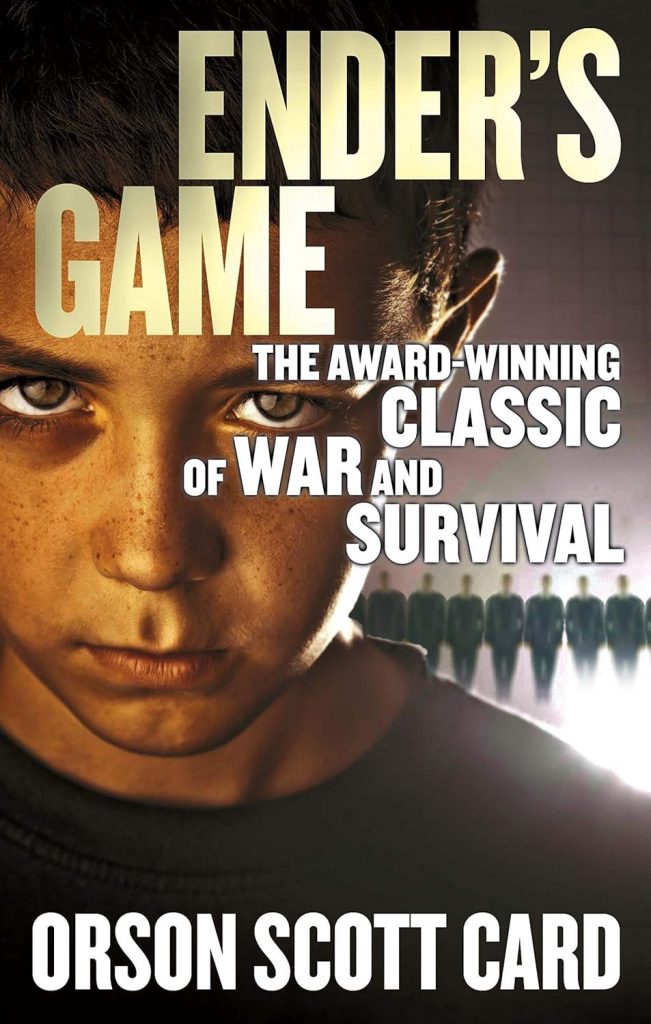
Ender’s Game (1985)
Romanian title: Jocul lui Ender
Series: Ender’s Saga #1
A brilliant child is recruited into a military training programme designed to prepare humanity for an interstellar conflict.
For me, the novel’s greatest strength is its combination of military strategy, psychological depth and difficult moral questions.
It remains one of the relatively few science fiction novels I have returned to repeatedly.
📖 Read my Ender’s Game review on BookFairy
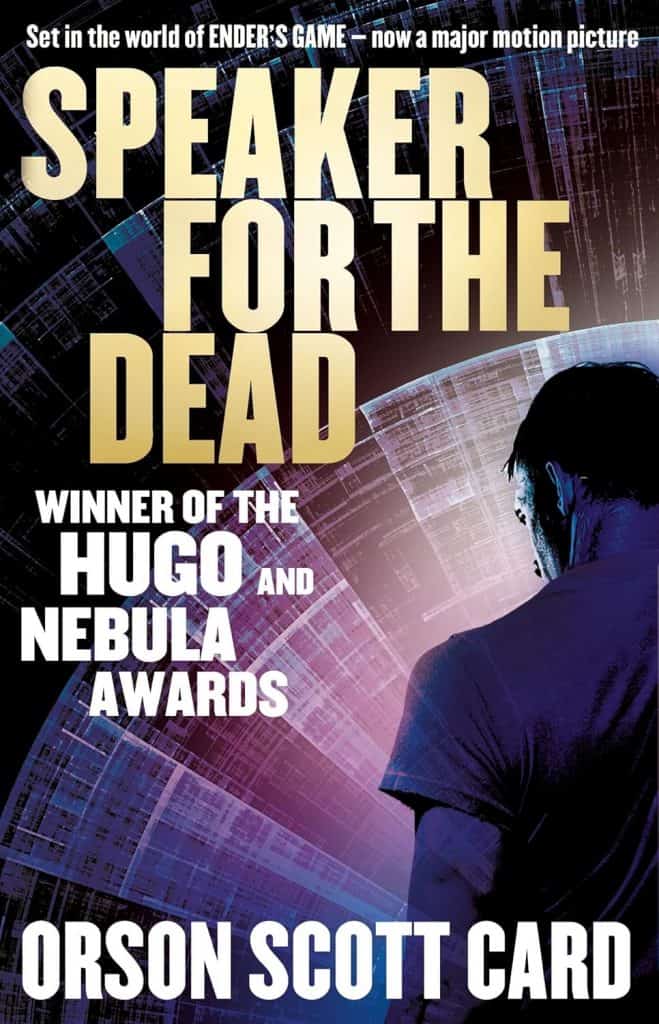
Speaker for the Dead (1986)
Romanian title: Vorbitor în numele morților
Series: Ender’s Saga #2
A very different continuation of Ender’s story, focusing on communication, prejudice, empathy and the responsibility of understanding another intelligent species.
I initially expected more military science fiction, but came to appreciate the novel’s quieter and more philosophical approach.
📖 Read my Speaker for the Dead review on BookFairy
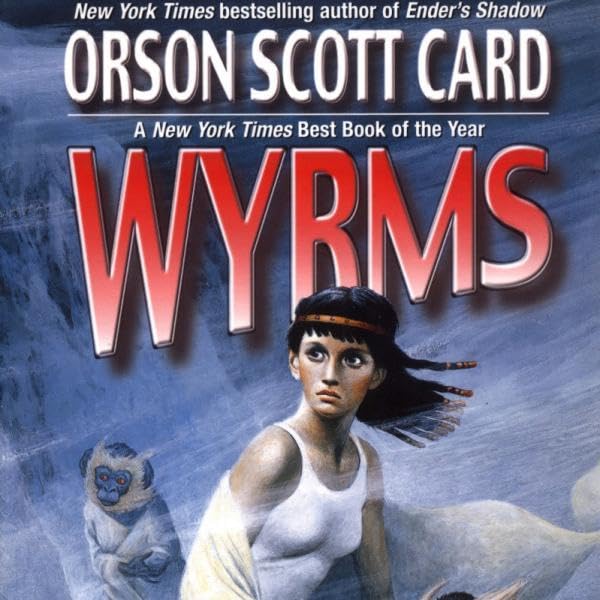
Wyrms (1987)
Romanian edition: Wyrm
Series: Standalone
An imaginative science fantasy novel exploring knowledge, power, identity and the dangers of unchecked ambition.
I read it for the Nemira reading club and found that its underlying philosophical questions were even more interesting than the adventure itself.
📖 Read my Wyrm review on BookFairy
📖 Reading Order
Orson Scott Card has written several extensive series, many of which belong to completely separate fictional universes.
For new readers, I recommend starting with the main Ender novels in publication order before exploring the connected Shadow and Formic Wars books.
🚀 Ender’s Saga — Main Reading Order
The central sequence follows Ender Wiggin and the consequences of humanity’s conflict with the Formics.
📚 Publication Order (Recommended)
- Ender’s Game (1985)
- Speaker for the Dead (1986)
- Xenocide (1991)
- Children of the Mind (1996)
These four novels form the core Ender sequence.
Additional Ender Books
- A War of Gifts: An Ender Story (2007) — Companion novella.
- Ender in Exile (2008) — A novel set partly between Ender’s Game and Speaker for the Dead.
- First Meetings in the Enderverse (2002/2003) — Collection of related stories.
Recommended reading order: Read the four main novels first. Although Ender in Exile takes place earlier in the fictional timeline, it is best approached after the main sequence because it draws on information revealed elsewhere in the universe.
🌑 The Shadow Saga — Reading Order
The Shadow books explore events connected to Ender’s Game from different perspectives, particularly through Bean and other characters.
- Ender’s Shadow (1999) — Umbra lui Ender
- Shadow of the Hegemon (2001) — Umbra Hegemonului
- Shadow Puppets (2002) — Umbra marionetelor
- Shadow of the Giant (2005) — Umbra uriașului
- Shadows in Flight (2012)
- The Last Shadow (2021)
The Last Shadow connects the Shadow storyline with the larger Ender universe.
For first-time readers, I recommend completing at least Ender’s Game before beginning Ender’s Shadow.
👽 The First Formic War — Reading Order
Written in collaboration with Aaron Johnston, this prequel trilogy explores humanity’s earliest major conflict with the Formics.
- Earth Unaware (2012)
- Earth Afire (2013)
- Earth Awakens (2014)
Although these books take place before Ender’s lifetime, they are better approached after becoming familiar with the original universe.
🛸 The Second Formic War — Reading Order
Also written with Aaron Johnston:
- The Swarm (2016)
- The Hive (2019)
A planned continuation, The Queens, should not be counted as a published novel until its publication is confirmed.
🏫 Fleet School
Children of the Fleet (2017)
This novel takes place within the Ender universe but introduces a different group of young characters.
📚 Other Major Series by Orson Scott Card
🌾 The Tales of Alvin Maker
An alternative-history fantasy series inspired by American folklore, religion and mythology.
- Seventh Son (1987)
- Red Prophet (1988)
- Prentice Alvin (1989)
- Alvin Journeyman (1995)
- Heartfire (1998)
- The Crystal City (2003)
The series also includes related shorter fiction.
🌍 Homecoming Saga
A five-book science fiction series exploring humanity’s origins, memory, religion and survival.
- The Memory of Earth (1992)
- The Call of Earth (1993)
- The Ships of Earth (1994)
- Earthfall (1995)
- Earthborn (1995)
Recommended reading order: Publication order.
⏳ Pathfinder Trilogy
A science fiction and fantasy trilogy involving time, unusual abilities and the mysteries surrounding a seemingly familiar world.
- Pathfinder (2010)
- Ruins (2012)
- Visitors (2014)
✨ Mither Mages Trilogy
An urban fantasy series centred on magic, hidden identities and ancient powers.
- The Lost Gate (2011)
- The Gate Thief (2013)
- Gatefather (2015)
📜 Women of Genesis
A historical and biblical fiction series:
- Sarah (2000)
- Rebekah (2001)
- Rachel and Leah (2004)
⚔️ Empire
A political thriller series:
- Empire (2006)
- Hidden Empire (2009)
🇷🇴 Romanian Editions
Several of Orson Scott Card’s major novels have been translated into Romanian, particularly through Nemira and its Armada imprint.
The publisher has released multiple editions of the Ender books over the years.
| Original Title | Romanian Title |
|---|---|
| Ender’s Game | Jocul lui Ender |
| Speaker for the Dead | Vorbitor în numele morților |
| Xenocide | Xenocid |
| Children of the Mind | Copiii minții |
| Ender’s Shadow | Umbra lui Ender |
| Shadow of the Hegemon | Umbra Hegemonului |
| Shadow Puppets | Umbra marionetelor |
| Shadow of the Giant | Umbra uriașului |
| Wyrms | Wyrm |
Nemira — Ender’s Saga
The first four Ender novels have been published in Romanian by Nemira, including more recent editions under Armada.
- Jocul lui Ender — Armada edition, 2021.
- Vorbitor în numele morților — Armada edition, 2022.
- Xenocid — Armada edition, 2022.
- Copiii minții — available in Romanian editions from Nemira.
These are not necessarily the first Romanian publication dates. Earlier Nemira editions also exist and are documented separately in the complete bibliography.
Wyrm
The Romanian edition of Wyrms was published as Wyrm by Nemira in 2010.
Translator: Roxana Brînceanu
Collection: Nautilus
📚 Standalone Novels and Other Fiction
Beyond his major series, Card has written numerous independent novels across science fiction, fantasy, horror and historical fiction.
Selected titles include:
- A Planet Called Treason (1978), later revised as Treason.
- Songmaster (1979/1980).
- Hart’s Hope (1983).
- Wyrms (1987).
- The Abyss (1989), a novelisation.
- Lost Boys (1992).
- Treasure Box (1996).
- Homebody (1998).
- Enchantment (1999).
- Magic Street (2005).
- Invasive Procedures (2007), written with Aaron Johnston.
Card has also written short-story collections, graphic novels, plays, poetry, literary criticism and books about writing.
These works are catalogued chronologically in the dedicated bibliography rather than being treated as part of the Ender saga.
⭐ Where Should You Start?
If you’re discovering Orson Scott Card for the first time, I recommend beginning with Ender’s Game.
It introduces his best-known universe, but more importantly, it demonstrates several of the qualities that make his fiction memorable: complex moral dilemmas, imaginative science fiction and characters forced to make difficult decisions.
After Ender’s Game, continue with Speaker for the Dead.
Be prepared for a significant change in tone. The second novel is slower and more philosophical, but it explores questions about empathy and understanding that make the wider story considerably richer.
If you’d prefer a standalone novel, Wyrms is another excellent option, particularly for readers who enjoy science fantasy and speculative ideas.
Readers looking for fantasy rather than science fiction might prefer Seventh Son, the beginning of The Tales of Alvin Maker.
💜 BookFairy Recommendation: Start with Ender’s Game, then read Speaker for the Dead. The contrast between these two novels reveals more about Card’s range as a writer than either book does on its own.
💜 My Favourite Orson Scott Card Books
Choosing a single favourite is difficult because the Card novels I’ve reviewed offer very different reading experiences.
Ender’s Game has a special place in my reading history. I’ve returned to it several times, and the story continues to reveal new layers as my perspective changes.
Speaker for the Dead impressed me through its willingness to abandon the military focus of the first book in favour of empathy, communication and cultural understanding.
And Wyrm was particularly memorable because of its exploration of power, knowledge and responsibility. It also generated one of those reading-club conversations that continue long after the meeting itself has ended.
What connects these books for me is not their setting or their plot structure.
It is Card’s interest in the relationship between exceptional ability and moral responsibility.
His characters are frequently intelligent, talented or unusually powerful. Yet their greatest challenges often involve deciding what they should do rather than simply discovering what they can do.
That is the aspect of his writing I appreciate most, and it is why I continue to find his science fiction worth reading and discussing.
📚 Complete Orson Scott Card Bibliography
Explore the complete bibliography of Orson Scott Card, covering his science fiction and fantasy novels, short stories, novellas, collections, graphic novels, poetry, non-fiction and collaborations.
The bibliography includes publication chronology, reading orders for the Ender, Shadow, Alvin Maker and other major series, Romanian translations, and links to existing BookFairy reviews.
It also distinguishes original publications from revised editions, alternative titles, omnibus collections and later reprints.