
Author Guide | BookFairy
📖 About Markus Zusak
Markus Zusak is an Australian author best known for The Book Thief, an extraordinary historical novel narrated by Death and set in Nazi Germany during the Second World War.
Born in Sydney in 1975, Zusak grew up in a family with German and Austrian roots. His parents’ experiences and stories about Europe during the war helped shape his interest in history, memory and the lives of ordinary people caught in extraordinary circumstances.
His first published novel, The Underdog (1999), introduced the Wolfe brothers and began a trilogy exploring adolescence, family relationships, poverty, ambition and the difficult transition towards adulthood.
He followed the trilogy with The Messenger (2002), also published as I Am the Messenger, before achieving international recognition with The Book Thief (2005).
What makes Zusak’s writing distinctive is his ability to combine deeply emotional storytelling with unusual narrative techniques. His novels often explore grief, love, courage, family relationships and the ways people find meaning in difficult circumstances.
His language can be poetic, his characters wonderfully imperfect, and his stories frequently reveal the extraordinary significance of apparently ordinary moments.
In 2018, he published Bridge of Clay, a novel about five brothers, family secrets and the complicated nature of forgiveness.
His first nonfiction book, Three Wild Dogs (and the Truth), appeared in Australia in 2024 and tells the story of his family’s life with three remarkable rescue dogs.
On BookFairy, I’m exploring Markus Zusak’s work through spoiler-free reviews, reading guides and information about English and Romanian editions.
💜 Why I Read Markus Zusak
Some books become unforgettable because of their characters. Others stay with us because of their language, their atmosphere or the emotions they awaken.
For me, The Book Thief manages to do all those things.
I have read the novel at least twice, and I have also watched its film adaptation. Yet returning to Liesel Meminger’s story never feels like simply revisiting something familiar.
The emotions remain just as powerful, and knowing what happens only makes me more aware of the small details, the acts of kindness and the tragedy surrounding the characters.
What I find particularly remarkable is Zusak’s decision to use Death as the narrator.
Death is not presented as a terrifying monster or an indifferent force. Instead, he is tired, observant, surprisingly compassionate and deeply affected by humanity.
Through this unusual perspective, Zusak explores the contradiction between human cruelty and human kindness.
I also love the importance he gives to books and language.
In The Book Thief, words can be instruments of manipulation and destruction, but they can also preserve memories, offer comfort and connect people who might otherwise remain alone.
Then there are the characters.
Liesel, Hans and Rosa Hubermann, Rudy Steiner and Max Vandenburg all contribute to a story that feels intensely human despite its extraordinary narrative voice.
Their relationships are built through small gestures, shared experiences, arguments, sacrifices and moments of tenderness.
That is what draws me to Markus Zusak’s writing: the ability to make personal stories feel meaningful against the background of much larger events.
His fiction reminds me that even the darkest periods of history contain people who continue to love, hope, protect one another and find reasons to carry on.
📚 Books Reviewed on BookFairy
Explore my spoiler-free reviews of Markus Zusak’s books, including personal impressions, book details and information about English and Romanian editions.
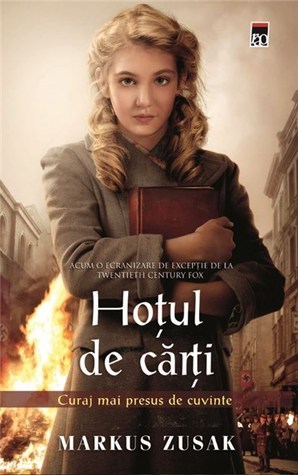
The Book Thief (2005)
Genre: Historical Fiction, Literary Fiction, Young Adult
Set in Nazi Germany, The Book Thief follows Liesel Meminger, a young girl who discovers the power of books and storytelling during one of history’s darkest periods.
Narrated by Death, the novel explores memory, courage, friendship, grief and the extraordinary importance of words.
I’ve read this book more than once, and it remains a deeply moving experience.
More reviews will be added as I continue exploring Markus Zusak’s books.
📚 Complete Markus Zusak Bibliography
Want to explore more of Markus Zusak’s writing? I’ve created a dedicated bibliography covering all his published novels, the Wolfe Brothers trilogy, his nonfiction memoir, anthology contributions and collected editions.
You’ll find his books in original publication order, alternative titles used internationally, Romanian translations published by RAO and information to help you avoid duplicate editions.
📖 Explore the Complete Markus Zusak Bibliography
📖 Markus Zusak Reading Order
Markus Zusak has written one trilogy alongside several standalone novels and a nonfiction book.
For readers discovering his work, the books can be approached in two ways: by following the Wolfe brothers’ trilogy in order or by beginning with one of his standalone novels.
📚 The Wolfe Brothers Trilogy
- The Underdog (1999)
- Fighting Ruben Wolfe (2000)
- When Dogs Cry (2001)
The third book was also published internationally under the title Getting the Girl.
These are alternative titles for the same novel, not two different instalments.
The trilogy follows Cameron and Ruben Wolfe as they navigate adolescence, family difficulties, relationships and their place in the world.
💜 BookFairy Recommendation: Read the trilogy in publication order, beginning with The Underdog.
📕 Standalone Novels
- The Messenger / I Am the Messenger (2002)
- The Book Thief (2005)
- Bridge of Clay (2018)
These novels are independent stories and can be read in any order.
The Messenger follows Ed Kennedy, a young man whose ordinary life changes after he becomes involved in a series of unusual missions.
The Book Thief explores the experiences of a young girl in Nazi Germany through the remarkable perspective of Death.
Bridge of Clay tells the story of the Dunbar brothers, exploring grief, family relationships and the difficult process of rebuilding what has been broken.
🐕 Nonfiction
Three Wild Dogs (and the Truth) (2024)
Markus Zusak’s first nonfiction book explores his family’s experiences with three rescued dogs.
Combining humour, affection and personal reflection, the book offers readers a more intimate perspective on the author’s life.
🇷🇴 Markus Zusak Books Published in Romanian
Several of Markus Zusak’s best-known novels have been translated into Romanian by Editura RAO.
| Original English Title | Romanian Title |
|---|---|
| The Messenger / I Am the Messenger | Mesagerul |
| The Book Thief | Hoțul de cărți |
| Bridge of Clay | Podul de lut |
Hoțul de cărți
The Book Thief has appeared in several Romanian editions through RAO.
My own reading experience is with a Romanian paperback edition from the publisher’s Biblioteca RAO collection.
The novel is also familiar to Romanian readers through its 2013 film adaptation.
Mesagerul
Originally published in Australia as The Messenger, this standalone novel is available in Romanian as Mesagerul.
It offers a different kind of story from The Book Thief, focusing on an ordinary young man whose life takes an unexpected direction.
Podul de lut
Bridge of Clay was published in Romanian as Podul de lut by RAO in 2019.
It is a family saga concerned with loss, forgiveness, love and the complicated relationships between five brothers.
A Note for Romanian Collectors
RAO has also offered publisher bundles containing Hoțul de cărți, Mesagerul and Podul de lut.
These are collections of existing titles, not additional novels.
Different covers and reprints should therefore be distinguished from newly translated works when building a personal library.
⭐ Where Should You Start Reading Markus Zusak?
If you’re new to Markus Zusak, The Book Thief is my first recommendation.
It is an unforgettable novel that combines historical fiction with an unusual narrative voice and extraordinary emotional depth.
Although the story takes place during the Second World War, its central themes extend far beyond that historical period.
It is about the importance of words, the persistence of memory and the small acts of courage that help people survive.
Readers who prefer contemporary fiction might enjoy beginning with The Messenger.
Those interested in family sagas and complicated relationships could consider Bridge of Clay.
And if you want to explore Zusak’s earliest published fiction, The Underdog is the natural starting point for the Wolfe brothers’ trilogy.
💜 My Favourite Markus Zusak Book So Far
The Book Thief is the Markus Zusak novel that has made the strongest impression on me.
I have returned to it more than once, and each reading has reminded me why certain stories remain with us long after we finish them.
The decision to let Death narrate Liesel’s life is extraordinary.
I love the contrast between Death’s weary observations and the moments of humanity that continue to surprise him.
I also admire the way Zusak writes about books and language. Words are never presented as entirely innocent or entirely dangerous. Their power depends upon how people choose to use them.
Above all, I remember the characters.
Hans Hubermann’s quiet kindness, Rosa’s complicated love, Rudy’s loyalty, Max’s imagination and Liesel’s determination make the novel feel deeply personal.
Although I still have other Markus Zusak books to explore, The Book Thief remains one of those rare novels I can reread and still find something new waiting between its pages.