 Fantasy

📝 First Impressions
The Emperor’s Soul is a short book with a surprisingly large idea at its centre: what makes a person who they are? Brandon Sanderson builds the story around a woman who can reshape objects by understanding their histories, then gives her an impossible task that turns the same question toward a human life. I was drawn in by the contrast between the novella’s compact length and the philosophical weight of its premise.
What stayed with me most was the way the story connects identity, memory and change. Its setting may be an imperial palace, but the questions it raises feel close to everyday life. We all shape the spaces around us, and we can also find ourselves shaped by routines, expectations and the roles other people assign us. Shai’s work gives that idea a vivid fantasy form, while Ashravan’s situation makes it feel urgent.
The novella’s Hugo Award for Best Novella in 2013 is well deserved. In just 142 pages, it offers a focused story, a distinctive magical concept and plenty to think about after the final page. I’m looking forward to sharing what I made of it, especially the way Sanderson uses a fantastical premise to reflect on the world we live in.
💜 What I Loved
What I loved most about The Emperor’s Soul is the way its central idea invites reflection without making the story feel like an essay. Shai’s art of Forgery depends on learning an object’s history and imagining how it might have become something else. That magic is fascinating in its own right, but it also becomes a way to think about identity: how much of who we are comes from our past, and how much might change if our experiences or choices had been different?
I also enjoyed how the novella connects that idea to Ashravan. Shai is asked to create a new soul for an emperor who has been left without one, and the task is both practical and deeply unsettling. It asks her to do more than imitate a person. She has to understand what makes a life believable and whether a carefully constructed history can become something real. I found that premise compelling because there is no easy answer waiting beneath the magic.
The setting adds to the story’s appeal. The imperial palace is a place of power, rules and careful observation, and Shai has to work within its restrictions while deciding whom she can trust. The pressure around her task keeps the story moving, while the conversations and reflections give it room to explore its bigger questions. I liked that the novella could feel thoughtful and tense at the same time.
Most of all, I appreciated how much Sanderson accomplishes in such a compact story. The magic feels distinctive, the central conflict is clear, and the themes linger beyond the plot. The Emperor’s Soul left me thinking about the stories we tell about ourselves—and whether changing those stories can change who we are.
🤔 What Didn’t Quite Work for Me
Because The Emperor’s Soul is a novella, it has less room than a full-length novel to let every part of its world and cast unfold. The story is tightly focused on Shai’s task, which gives it a strong sense of direction, but it also means that some of the surrounding characters and political tensions remain at the edges. I would have welcomed more time to see how the palace worked beyond the spaces Shai occupies, and to understand more fully how the people around Ashravan view the crisis.
The central philosophical questions are one of the novella’s strengths, but they also occasionally slow the story down. Shai’s reflections on identity, memory and the nature of a soul are fascinating, yet there were moments when I wanted the plot to move forward more quickly. The balance between contemplation and suspense worked for me overall, though I noticed the shifts in pace.
These are modest reservations rather than serious problems. The focused length is part of what makes the story so impressive, and the reflective passages give its magical premise much of its meaning. I simply would have enjoyed a little more space for the world and its secondary characters to develop.
👥 Who Would Enjoy This Book?
Readers who enjoy fantasy with ideas to turn over in their minds may find a lot to appreciate in The Emperor’s Soul. Its magic is imaginative, but the story’s deeper interest lies in its questions about identity, memory and the forces that shape a person. It is a good choice for anyone who likes a fantastical premise that can also open up a conversation about real life.
I think it will especially resonate with readers who have felt that work, routines or corporate expectations can take over too much of a person’s life. Shai’s task offers a striking way to consider what happens when we become defined by our roles and responsibilities, and what parts of ourselves we might be neglecting along the way. The story’s reflections on Ashravan’s lost enthusiasm also give those questions a very human focus.
At just 142 pages, this novella may suit readers looking for a compact story rather than a long commitment. Its short length doesn’t stop it from raising substantial questions, and readers who enjoy Hugo Award–winning fantasy, distinctive magic systems and thoughtful discussions about the nature of the self may find it particularly rewarding.
💭 Final Thoughts
The Emperor’s Soul is a compact fantasy novella that left me with more to think about than its length might suggest. Its magic gives the story a memorable foundation, but what stayed with me most was the way Brandon Sanderson uses that premise to explore identity, purpose and the parts of ourselves we can lose when life becomes too narrowly defined by work.
The story’s ideas felt especially relevant to the world we live in. We are often encouraged to specialise, fit into teams and focus on what our jobs require of us. Sometimes it can seem as though the private parts of life should be pushed aside, or that the things we do simply because they bring us joy are less important. Through the idea of Forgery, Sanderson turns these pressures into a thoughtful parable. The story reminded me that shaping our surroundings is not the same as truly understanding the people who live in them.
I also appreciated the reflections on Ashravan: how he lost his youthful enthusiasm, how discouragement and corruption affected him, and how life at the palace continued to run without necessarily running well. Those passages felt strikingly familiar. The line about understanding people as a way of understanding the world made me think, too, especially about workplaces where someone may have been doing a job for years without ever learning how things actually work.
At only 142 pages, The Emperor’s Soul is concise but rich in ideas. I can see why it won the Hugo Award for Best Novella. It invites readers to pause, filter its ideas through their own experience and consider them for themselves. This is a story I would recommend to anyone who enjoys fantasy that can entertain while also stirring the grey cells.
✨ The BookFairy Verdict
The Emperor’s Soul
📖 Book Details
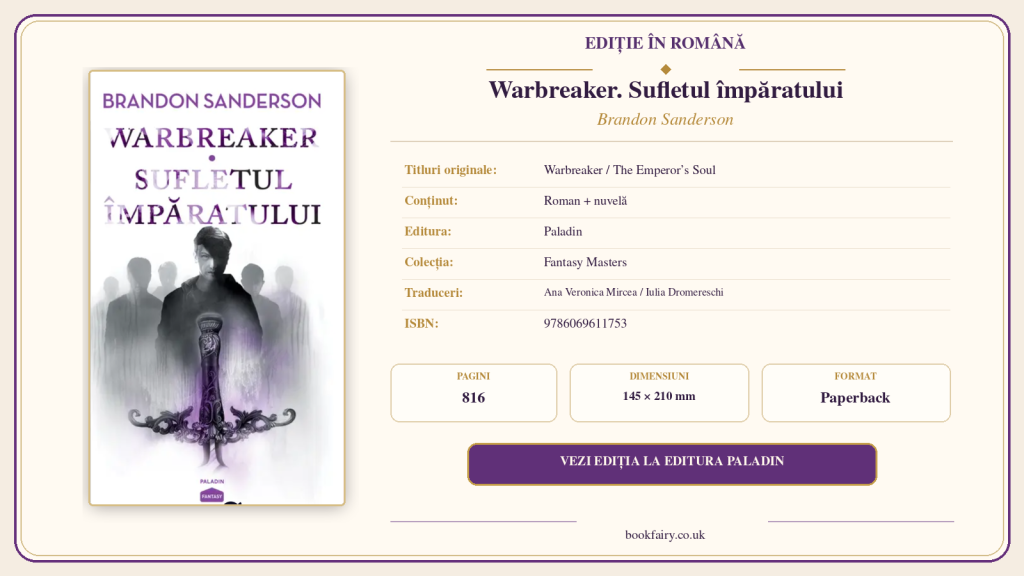
- Title: The Emperor’s Soul
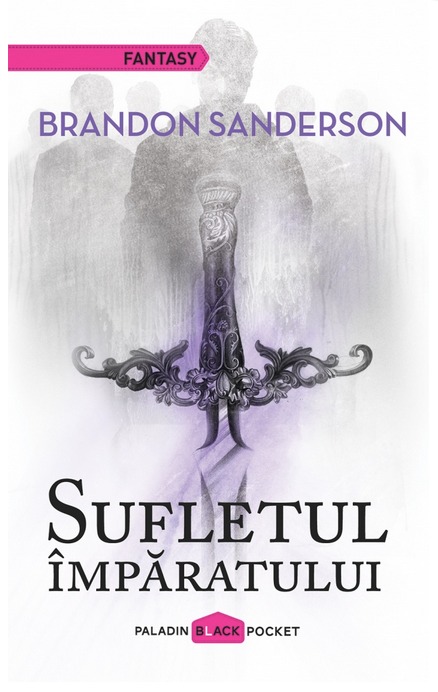
- Romanian Title: Sufletul împăratului
- Author: Brandon Sanderson
- Series: Elantris
- Genre: Fantasy
- Publisher (EN): Gollancz
- Publisher (RO): Paladin
- Collection: Paladin BLACK Pocket
- Published (EN): October 11, 2012
- Published (RO): May 2015
- Pages (EN): 160
- Pages (RO): 160
- Format Experienced: Hardcover
- Edition Owned: Romanian edition, translated by Iulia Dromereschi
🛒 Buy the Book
If The Emperor’s Soul sounds like your kind of read, you can support BookFairy by purchasing the book through the links below. It won’t cost you anything extra, and using these links helps support the site while allowing me to continue creating honest, independent book reviews.