 Science Fiction
📝 First Impressions
I came to The Ghost from the Grand Banks expecting a deep-sea adventure, something along the lines of Twenty Thousand Leagues Under the Sea. The title had me imagining mysteries hidden beneath the waves, so discovering that the “ghost” was the Titanic sent the story in a very different direction from the one I’d pictured.
The book follows a group of engineers, computer programmers and an inventor attempting to raise the long-lost ship as the centenary of its sinking approaches. Clarke’s interest in the technical side of the project is clear, and the novel spends plenty of time on the mathematics and physics behind it. Some of that went well beyond my understanding, though I kept reading because I wanted to see how the story unfolded.
I was also struck by the book’s publication date: 1990. Clarke was already writing about the “high-definition war” in television, which made me wonder how much of what felt futuristic then has since become ordinary. Even when the science left me behind, the novel gave me the sense that Clarke was looking ahead in ways I couldn’t quite put into words.
💜 What I Loved
I liked the ambition behind the central idea. Raising the Titanic is an enormous, almost unbelievable undertaking, and Clarke gives the project enough technical detail to make it feel like more than a passing sci-fi premise. The mix of engineers, programmers and an inventor also gives the story a practical, problem-solving energy.
The book’s age became part of the appeal, too. Reading a 1990 novel that already discusses the “high-definition war” in television was a pleasant surprise. Clarke’s forward-looking interests peek through the story, and I enjoyed noticing those glimpses of the future from the perspective of the present.
🤔 What Didn’t Quite Work for Me
I expected more of a deep-sea adventure, so the story’s focus on the Titanic recovery project wasn’t quite what I had hoped for. The technical material also took up a lot of space. I could follow the story despite the mathematics and physics, but much of that detail was beyond me and sometimes made the book harder to settle into.
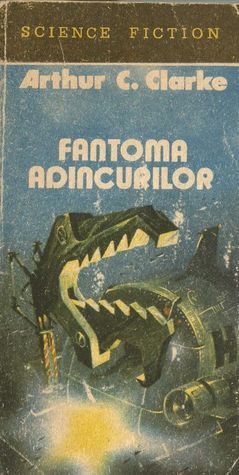
My Romanian edition was another frustration. It contained so many errors that I occasionally found myself wanting to call out the correct word. That pulled me out of the story and made parts of the reading experience more irritating than they needed to be.
👥 Who Would Enjoy It
Readers interested in the Titanic, ambitious engineering projects and the science behind them may find plenty to enjoy here. It may also appeal to fans of classic science fiction who like seeing how an author from 1990 imagined technology and media developing.
If you’re hoping for a fast-paced underwater adventure, though, this may not be the voyage you expect. The story spends a lot of time on technical ideas, and that focus may suit readers who enjoy the science more than it suited me.
💭 Final Thoughts
The Ghost from the Grand Banks wasn’t the deep-sea adventure I had imagined, and its mathematics and physics often went beyond me. Still, the story held my interest, and Clarke’s 1990 vision of future technology gave me something to think about. My Romanian edition’s many errors made the reading experience frustrating at times, but I’m glad I followed the story to the end.
✨ The BookFairy Verdict
The Ghost from the Grand Banks
📖 Book Details
- Title: The Ghost from the Grand Banks
- Author: Arthur C. Clarke
- Series: Standalone
- Genre: Science Fiction
- Publisher (EN): Gollancz
- Published (EN): 1990
- Format Experienced: Paperback
- Edition Owned: Romanian translation
🛒 Buy the Book
If The Ghost from the Grand Banks sounds like your kind of read, you can support BookFairy by purchasing it through the links below. It won’t cost you anything extra, and using these links helps support the site while allowing me to continue creating honest, independent book reviews.